A support ticket that starts with "the switch flickers when the light is off" almost always traces back to the same root cause: a no-neutral switch installed where the wiring, load or firmware assumption did not match. For B2B buyers this is not a footnote — it is one of the highest-volume return reasons for smart switches shipped into older housing stock. This article explains what a no-neutral switch is, why it matters, and what to put in an RFQ so the factory ships the right variant.
Why "neutral" is the whole issue
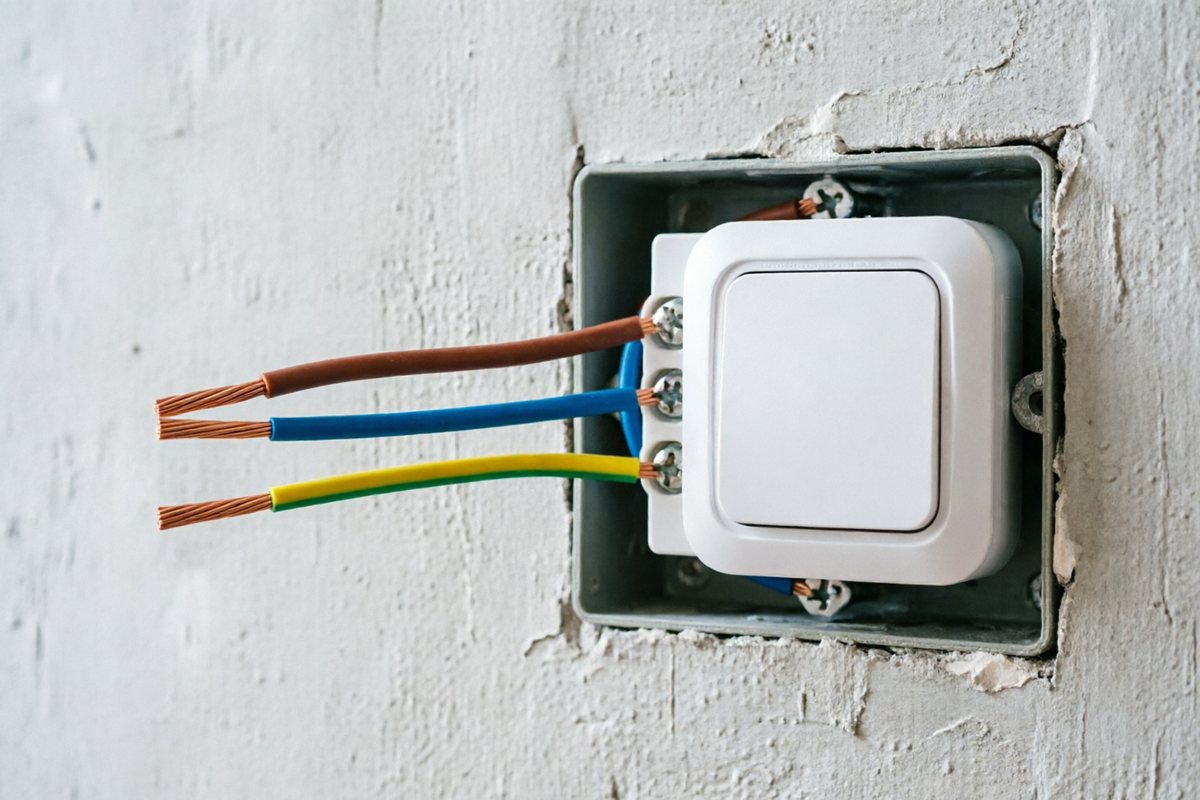
A standard smart switch needs a small standby current to keep its Wi‑Fi or Zigbee radio and relay powered even when the load is off, so the app can still see and control it. The simplest way to get that standby power is to tap the neutral wire directly at the switch box. Many older buildings — common across Europe, the UK and parts of Asia and Latin America — only ever ran a single live/switched-live loop to the switch box, with neutral present only at the light fitting. In that wiring pattern, there is no neutral for the switch to draw from.
How a no-neutral switch solves it
- Micro-current tap: The switch draws a very small bypass current through the load itself (the bulb or fixture) even while "off", using that trickle to power the radio module.
- Minimum load requirement: Because the bypass current has to flow through the load, most no-neutral switches specify a minimum wattage — very low-draw LED bulbs can be at or below that threshold, which is the single most common cause of flicker or failure-to-report-status complaints.
- Optional bypass capacitor: Some installs add a small bypass module in parallel with the load to absorb the standby current without it passing visibly through an LED driver — worth asking whether the factory's no-neutral SKU ships with or without one.
No-neutral vs neutral: when each applies
| Scenario | No-neutral switch | Standard (neutral) switch |
|---|---|---|
| Old EU/UK flat, single loop wiring | Usually required | Not available without rewiring |
| New build, neutral run to every box | Unnecessary — use standard | Preferred — no minimum-load risk |
| All-LED lighting under ~3W per gang | Higher flicker risk, confirm minimum load | Not applicable |
| Multi-gang box, mixed loads | Confirm per-gang minimum load in spec sheet | Simpler, no per-gang load math |
Regional wiring conventions worth knowing before you quote
No-neutral demand is not evenly spread across markets — it clusters wherever older housing stock was wired before smart switches existed as a category, and it changes by building age within the same country. A distributor selling into a market with a mix of pre-war apartments and new-build towers should expect meaningfully different neutral availability between the two segments, even within the same city. Renovation-focused buyers in particular often cannot get a firm answer on wiring pattern until an installer opens the switch box on site, which is one reason some catalogues carry both neutral and no-neutral variants of the same face style as standard practice rather than as an edge case. If your buyer profile skews toward renovation and resale rather than new-build, it is reasonable to assume no-neutral demand will be a recurring, not occasional, part of the order mix, and to plan factory relationships accordingly rather than treating it as a rare custom request each time it comes up.
What to specify in the RFQ
State clearly whether the target installs have neutral at the switch box or not — this single fact changes the SKU family, not just a firmware setting. If no-neutral, also state the typical bulb wattage and type (LED, halogen, CFL) so the factory can confirm the minimum load threshold against your fixtures, and ask whether a bypass capacitor is included or needs to be quoted as an accessory. Buyers sourcing for renovation markets with unknown wiring in every unit sometimes stock both variants and let the installer choose on site — reasonable, but it should be a deliberate stocking decision, not a surprise after the first batch of complaints.
This spec question sits upstream of protocol choice — see our Wi‑Fi vs Zigbee comparison for how radio choice interacts with standby power draw — and it belongs in the same conversation as gang count, covered in our guide to single-gang vs multi-gang sourcing. If you are unsure which wiring pattern dominates your target market, our solutions page breaks down typical installs by region and building age.
Common misconceptions worth correcting with buyers
"No-neutral" does not mean "no wiring problem possible" — it removes the neutral requirement but introduces a new constraint (minimum load) that end users rarely understand on their own. It is also not a firmware toggle that a factory can flip on a standard switch; it is typically a distinct hardware SKU with a different bypass circuit. Buyers who assume the two are interchangeable at the BOM level are the ones who end up managing warranty claims from flickering LED strips six months after shipment.
Not sure which wiring pattern your market uses?
Tell us the building age and typical bulb type in your RFQ and our trading desk will confirm which switch family — neutral or no-neutral — fits, based on factory spec sheets.
Start RFQ