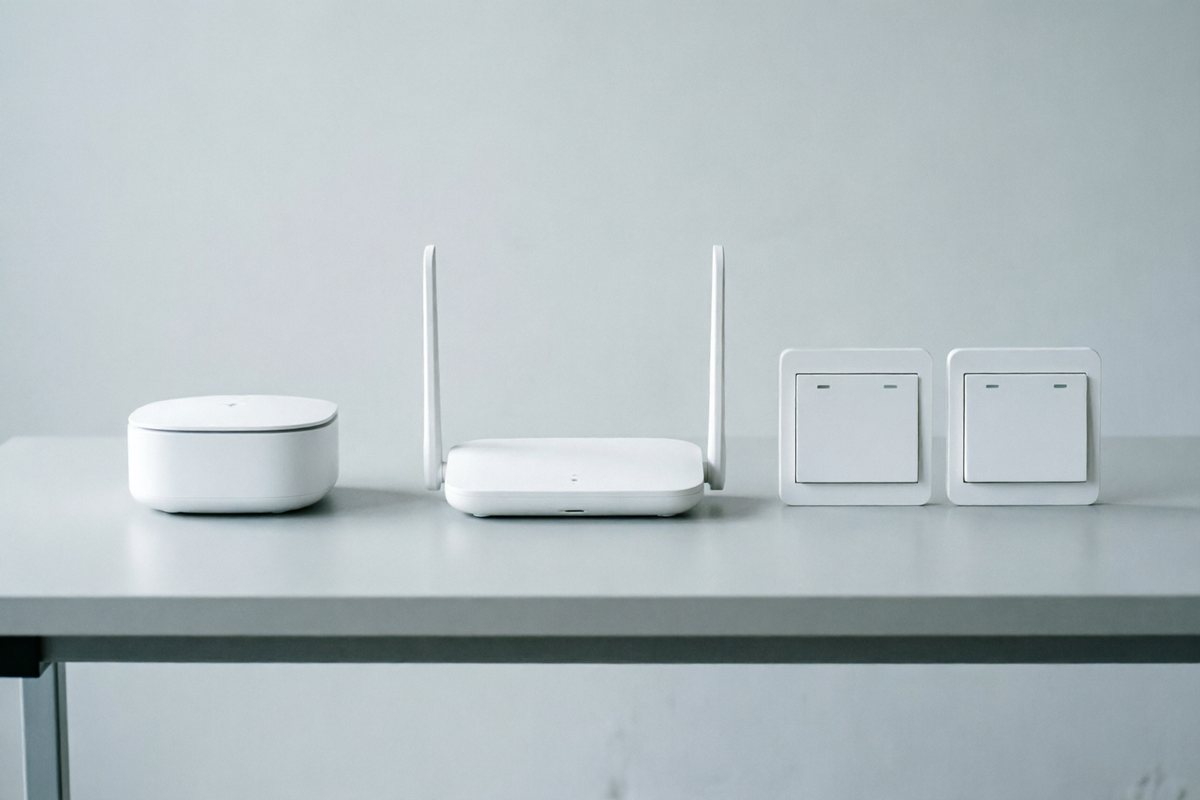
Frame, protocol, application — three answers shortlist a product-line combination. The output is education: your real quote is assembled from the spec sheet after the RFQ, never from a list price.
Pick one card per step. The next step opens as you go; the recommendation updates whenever you change an answer. A non-interactive lookup table follows below for reference.
Which wall frame does your market install? plate standard / back box
Which protocol ecosystem should the devices join? radio + app path
Where will the devices be installed? decides the pack around the switches
Protocol marked “Advise us”. The lean below is provisional — the trading desk shortlists two to three lines against your market, device density and app-brand policy. See the protocol comparison.
Application and protocol decide the combination; the frame answer sets the plate series and packing notes inside it. The 12V DC vehicle row is a separate, DC-only category.
| Frame | Plate series | What to check before the RFQ |
|---|---|---|
| 86-type | 86 × 86 mm square plate — the widest SKU choice in the catalogue | Back-box depth for no-neutral modules |
| EU | EU wallplate on round back boxes | Box depth and neutral availability per room |
| US | US decorative wallplate footprint | Load per gang; UL questions come up more often in this market |
| UK | UK square plate, stud fixing | UKCA paperwork path pairs with this series |
| Mixed / not sure | Several series consolidated in one order | Send photos or box measurements in the RFQ notes; the desk matches each series |
Every one of the 150 frame × protocol × application answers resolves to one of these six bundles. Each is quoted from its spec sheet — never from a published price.
Wi‑Fi touch / rocker wall switches, 1–4 gang, dimmer and fan variants, no-neutral options where wiring demands.
Zigbee touch / rocker wall switches plus a gateway — the mesh carries multi-room density and sensor traffic.
Wall switches positioned for a Matter roadmap — bridge or native endpoint, confirmed per SKU revision in writing.
Z-Wave wall switches sourced through partner factories; wired RS485 / KNX-class paths for SI-led projects.
Multi-scene panels and guest-room controls as one package — keycard power, bedside scenes, DND/MUR corridor units.
A separate DC category: scene panels and switches engineered for 12V DC systems in RVs, marine and specialty vehicles — AC wall-switch lines do not apply.

When apartments and hotels should pick hub-free vs mesh.
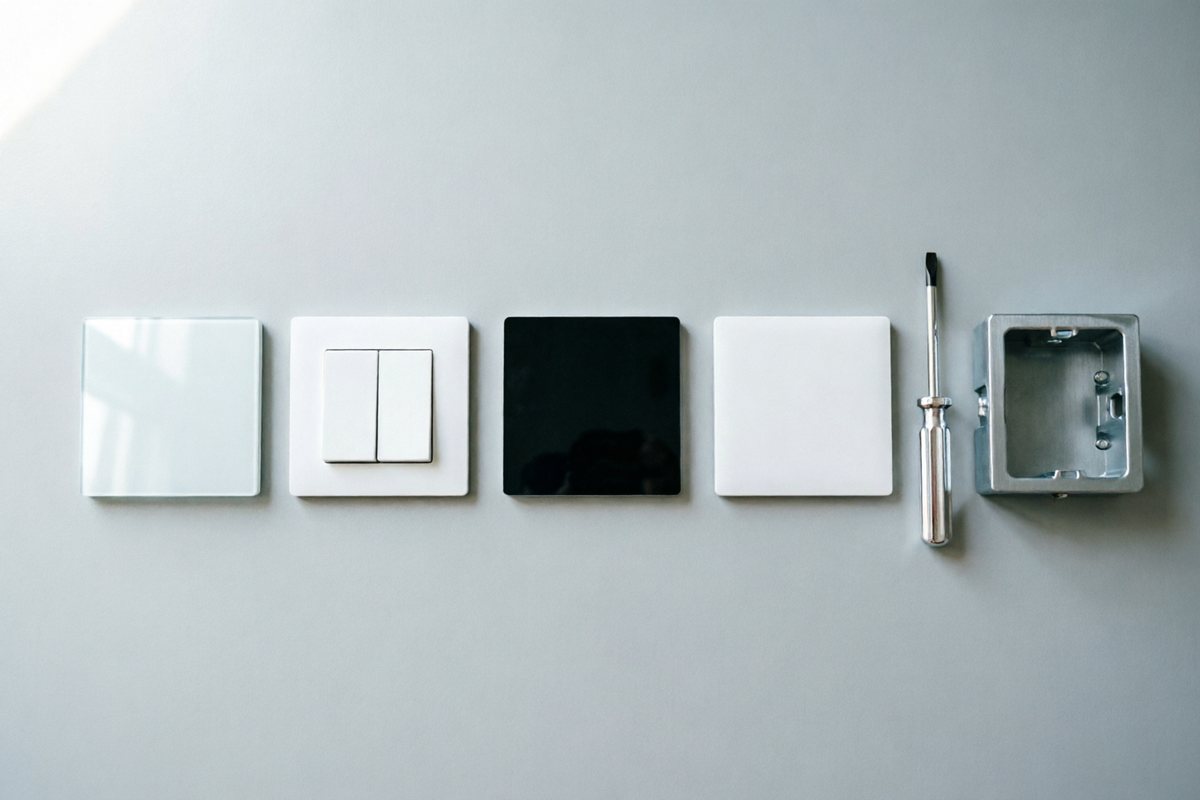
Frame, neutral, protocol and certs — the sourcing checklist.
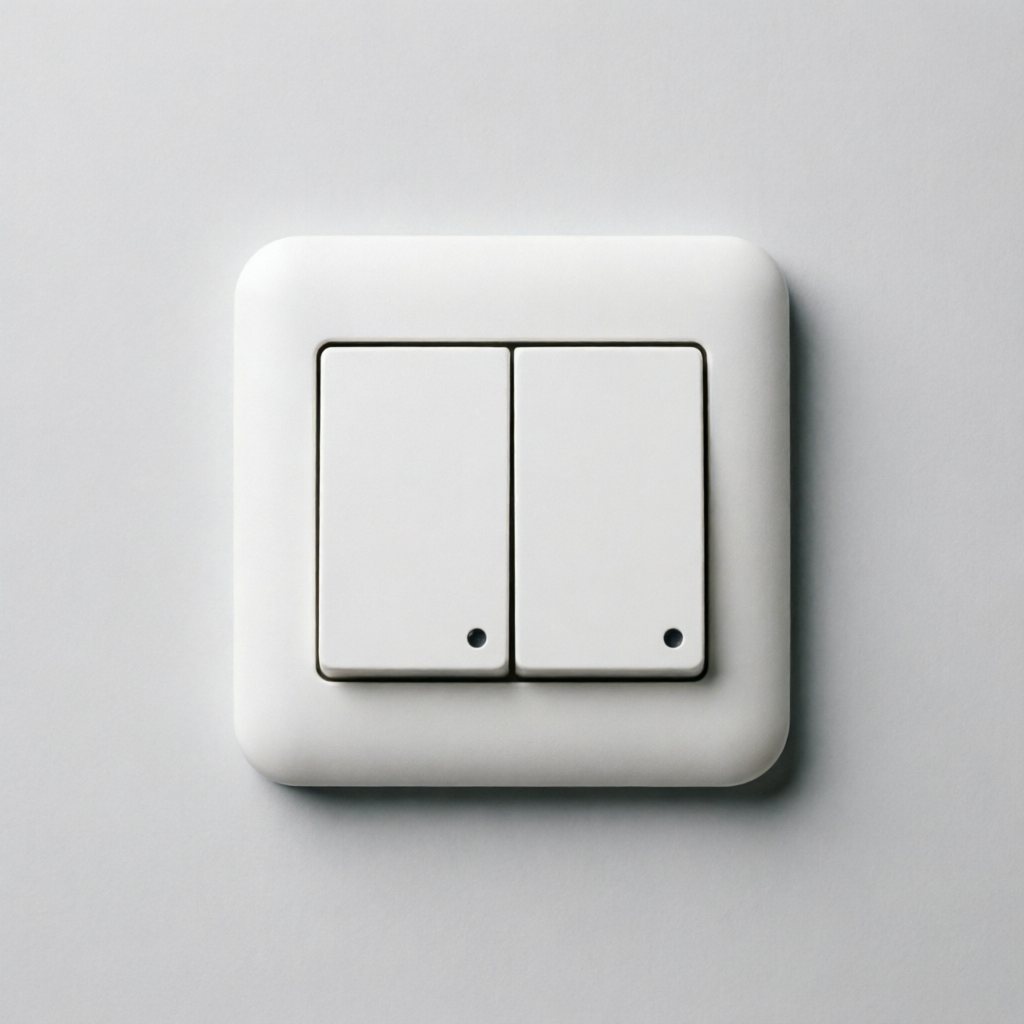
86 mm, EU, US and UK plates — what changes per market.
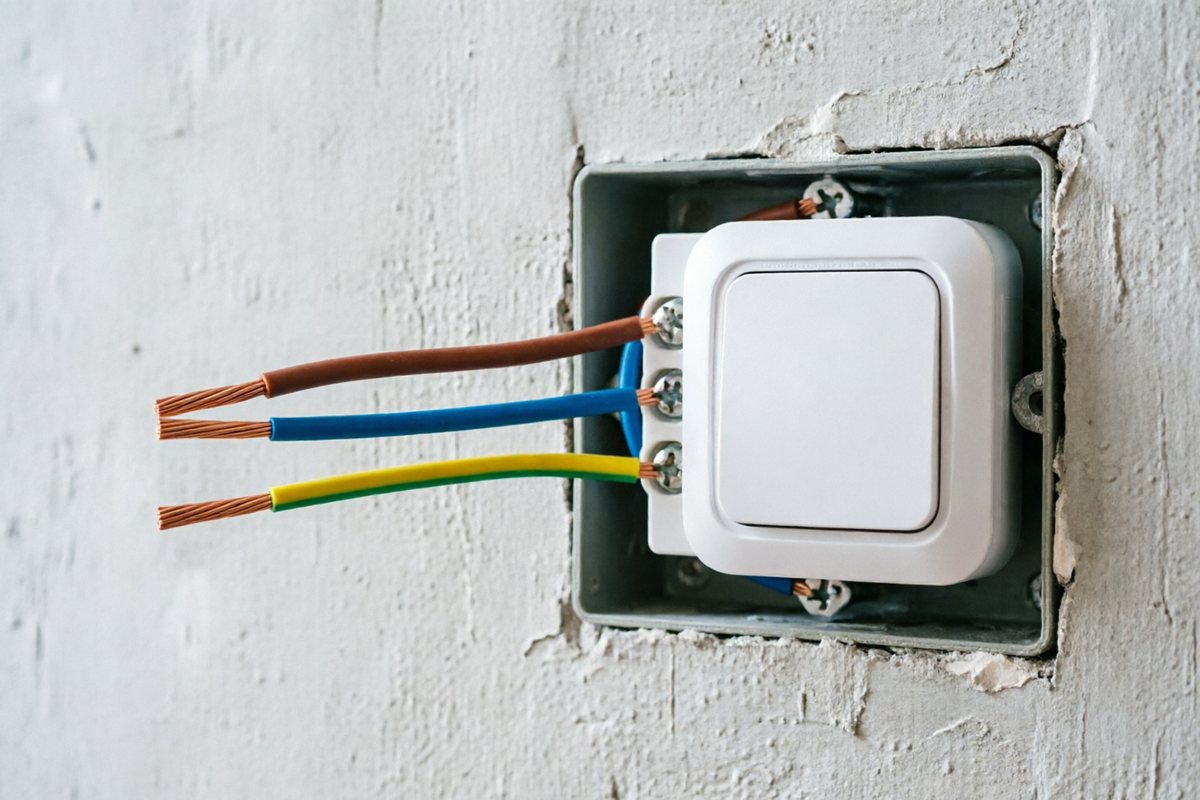
What they are and when your wiring forces the choice.
This wizard is a shortlisting aid built on the public protocol and product-line logic. The binding answer is the RFQ reply, where factory-confirmed options, lead time and certificates are stated in writing. If the two differ, write the disagreement into the RFQ notes and ask the desk to price both paths side by side.
No. Neutral vs no-neutral is a wiring question at the back box, not a protocol question. State the wiring situation in the RFQ — no-neutral designs exist across the lines but constrain which module can be used. See the no-neutral guide.
Yes. Mixed plate standards are normal for a trading desk — one RFQ can consolidate several frame series into one shipment with a matched finish and a single carton plan. Send photos or back-box measurements in the notes.
No. The result names a product-line direction. Pricing is assembled from the spec sheet — frame, gang mix, protocol module, customization tier, certifications and quantity — after the RFQ. See pricing & MOQ logic.
Send frame, protocol, application and quantity in one RFQ — the trading desk replies with factory options and a per-line-item quote. Want the commercial logic first? Read the pricing page.