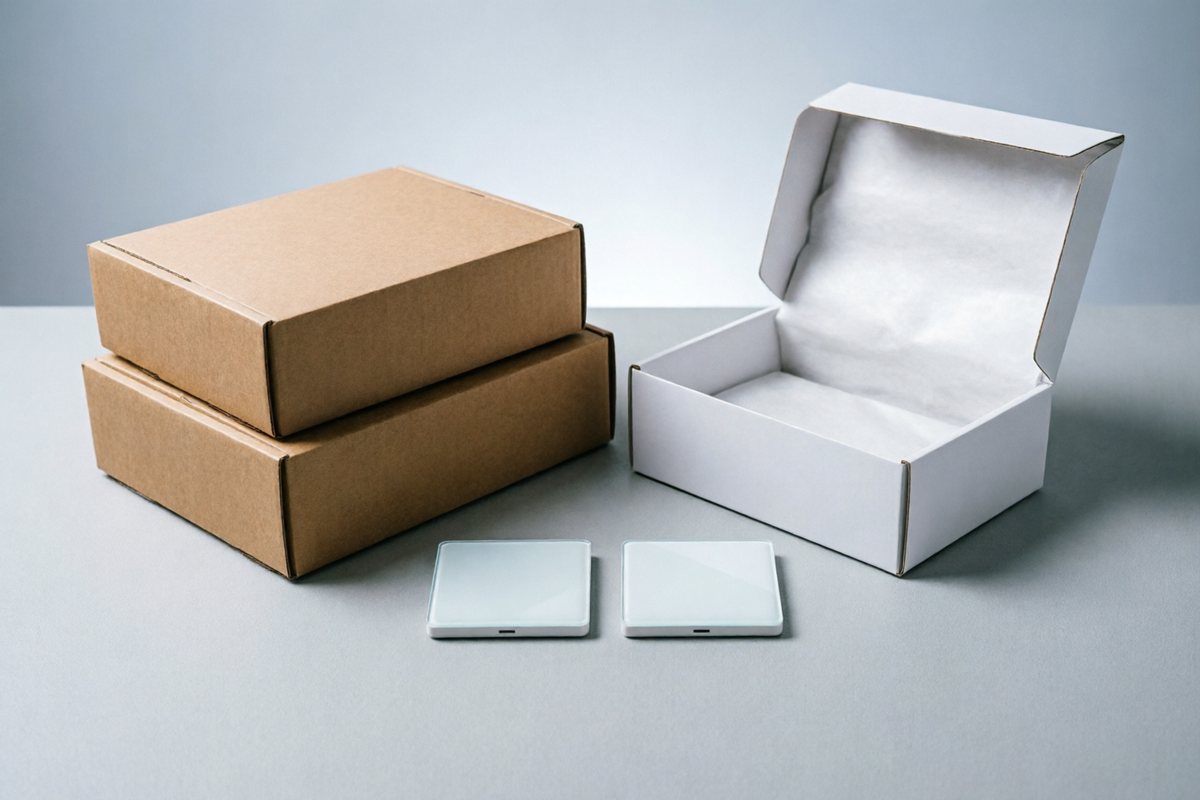
Logo printing and packaging customization is the entry point for almost every private-label smart switch programme — it reuses existing tooling, keeps MOQ close to standard, and can move to sample quickly if the buyer's side of the file checklist is complete. The word "if" is doing a lot of work in that sentence: the single biggest cause of stalled sample rounds on print-and-pack OEM is a missing or unusable file, not a factory delay.
Silk-print vs laser: two different logo methods
- Silk-print: ink applied through a screen, good for solid color logos, needs a plate cut per design — this plate fee is the recurring cost buyers underestimate on small runs.
- Laser marking/etching: removes or alters the surface layer directly, often preferred for fine detail or single-color engraved marks, no ink plate but different equipment setup.
Neither method changes the switch's underlying certification, since both are cosmetic surface treatments — but confirm this with the factory per SKU rather than assuming, especially if the logo placement is unusually large.
Logo file requirements that actually work
- Vector files (AI/SVG/EPS), not a JPEG or PNG screenshot pulled from a website.
- A defined safe-zone / minimum size — small or intricate logos on dark glass frequently fail QC photo review, so oversized submissions with room to scale down are safer than pixel-perfect tiny logos.
- Color specification (Pantone or CMYK breakdown) rather than a screen color name, especially for silk-print matching.
Packaging: gift box vs bulk carton are different products
A sample-stage gift box and a mass-production bulk carton are not automatically the same design scaled up — retail-facing gift boxes carry different structural and print requirements than bulk cartons meant for palletized freight. Approving a beautiful gift box sample does not guarantee the bulk carton will look or perform the same; ask for both to be sampled if the order includes both packaging types.
What buyers must supply beyond the logo
| Item | Format needed | Common failure point |
|---|---|---|
| Logo | Vector AI/SVG/EPS | Raster file submitted instead |
| Manual languages | Final translated text, not machine draft | Language list changes after print plate is cut |
| Carton marks / barcode | Barcode ownership and format confirmed | Barcode assigned too late, printed carton reprinted |
| Color reference | Pantone / physical swatch | Screen color used, mismatch discovered at mass |
Sequencing to avoid scrap
Approve the logo and packaging art on the physical sample before the print plate or carton dies are committed to mass production — screen mockups and printed samples read differently under real lighting, and a plate fee paid twice because of a late change is an avoidable cost. See the fuller process on OEM / ODM, and if the branding programme is meant to grow into a full private-label line rather than a one-off print run, building a private label brand covers the sequencing beyond this first order.
What to put in the RFQ
Attach the vector logo file, state silk-print or laser preference, specify gift box and/or bulk carton needs, and list manual languages as final text rather than "to be confirmed." A complete file set at RFQ stage is the single fastest way to reach an approved sample.
Ready to brand an existing SKU?
Send your logo files and packaging preference — our trading desk will confirm print method, plate fee and lead time in one quote.
Start RFQArtwork Handoff: Files, Proofs and the Approval Chain
Print customization quality is decided long before the printing press — in the artwork handoff. Vector files with fonts outlined, a stated color reference for brand colors, and a printable size sheet per surface are the difference between a one-round proof and four rounds of close-enough. State the surfaces explicitly: the plate print, the retail box, the inner carton, the manual, and any regulatory text that must appear per destination market — the last one is where legal review belongs, not on the print floor.
The approval chain should mirror production: a digital proof for layout, then a physical printed sample on the actual material — glass print, carton stock, manual paper — because ink behaves differently on each. Sign the physical sample and reference it in the purchase order; that signed sample is what the factory prints against for the whole run. For multi-factory orders, the same artwork must reach every factory producing branded parts, and a consolidating desk handles that distribution as part of the RFQ rather than leaving each factory to interpret the same file differently — which is how one order arrives with three slightly different logos.
One more handoff detail separates professional print programs from improvised ones: a change log. Every artwork revision — even the smallest copy edit on the manual — dated and versioned, referenced on each proof. Print errors trace to version confusion more often than to press problems, and the log is what makes version confusion impossible. Suppliers maintain their own copy; buyers who maintain theirs resolve any discrepancy in minutes. The log is the last page of the artwork pack and the first page of a smooth production run.
The unboxing sequence deserves one deliberate pass, because it is the brands first physical sentence. Order of reveals — device, accessories, manual, warranty card — is a print and packing specification, not an accident, and factories execute the sequence you specify if you specify it. Walk your competitors unboxing on video, note the one moment you remember, and write that moment into your pack. One page in the RFQ covering sequence and materials turns the carton opening into the review opening, and reviews are where packaging investment compounds.