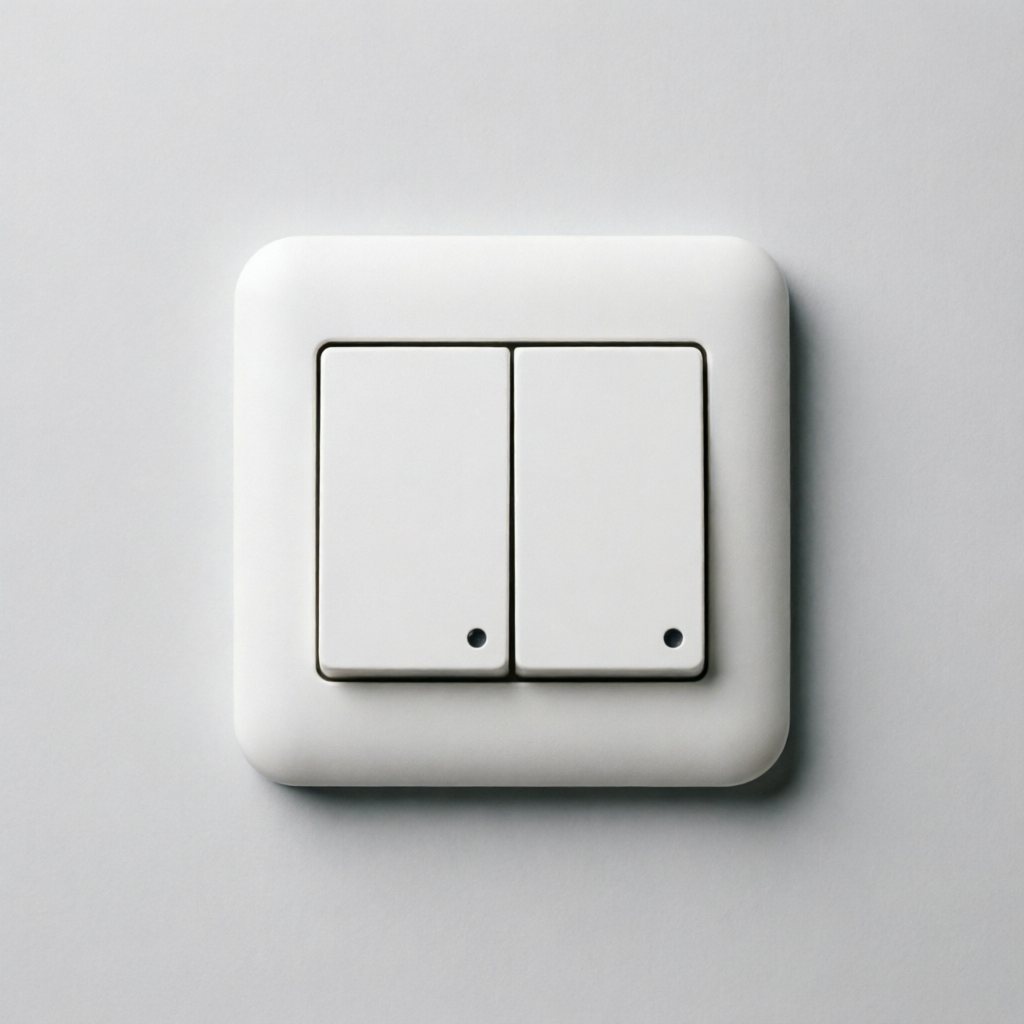
Color and finish requests sound like the simplest kind of customization on a smart wall switch — "just make it black instead of white" — and sometimes that is exactly how simple it is. Other times the same request touches glass tooling, ink formulation or touch-sensor calibration and turns into a multi-week change. The difference is worth understanding before it is buried inside a vague RFQ line.
Frame color: usually the easy change
The plastic frame around a glass panel switch is typically injection-moulded, and swapping its color is often a masterbatch (colorant) change rather than a new mould — assuming the target color uses a standard resin family and does not require a new surface texture. This is the fastest and cheapest color customization available and a reasonable first request for any private-label programme.
Glass color: tied to the print/ink process
The glass panel itself — white, black, grey being the common families referenced on our OEM / ODM page — is a different story. Glass color is set during manufacture, not applied afterward, so moving between glass color families is closer to selecting from the factory's existing glass stock than a simple print change. A genuinely new glass color outside existing stock is a heavier request, closer to ODM territory than standard OEM.
Backlight color and brightness
Where the module supports it, backlight color and night brightness can sometimes be adjusted in firmware or hardware configuration, but not all modules allow backlight color customization — this needs to be confirmed per SKU rather than assumed to be universally available. State preferred night brightness and color explicitly in the brief rather than leaving it as a default.
Metal and premium finishes
Brushed metal frames, anodized finishes or premium coatings usually mean a different frame material entirely, not a colorant change on the standard plastic frame — expect this to behave like a new SKU variant with its own lead time and MOQ rather than a simple option toggle on an existing part.
The real risk: color drift across factories
Programmes that source switches and scene panels from more than one factory to build a unified color family face a specific risk — two factories can each hit "matches the sample" under their own lighting and still not match each other under the same light. The only reliable safeguard is a physical color target (a Pantone chip or an approved physical sample) checked under consistent lighting before mass production, not a screen mockup or a verbal color name.
Quick reference: what triggers new tooling
| Change requested | Usually needs | Lead time signal |
|---|---|---|
| Frame color (standard resin) | Masterbatch swap | Fast |
| Glass color family switch | Existing glass stock selection | Moderate — confirm stock |
| New glass color, no existing stock | New process / ODM-level request | Long |
| Backlight color | Module-dependent — confirm per SKU | Varies |
| Metal/premium finish | New frame material, new variant | Long |
What to state in the RFQ
Specify frame color vs glass color vs backlight color as separate items, provide a physical color target if the match must be strict, and state whether the order spans more than one factory so a sample-lock step can be planned. Pair this with logo printing and packaging customization if branding is part of the same brief, and check mold minimum requirements if the finish request turns into a new physical part.
Planning a color-unified product line?
Send your target color family and factories in scope — our trading desk will flag which changes are fast and which need a sample-lock cycle.
Start RFQManaging Color Across Factories and Production Runs
Color is easy to specify and hard to hold. Glass panels, plastic frames and metal plates take color through different processes — printing, dyeing, anodizing — and the same specification sheet can yield visibly different results across them. Multi-line orders that assume one color across switches, scene panels and sockets from different factories need a physical master: a signed color target plate that every factory matches against under defined lighting before mass production.
Two practices keep color honest across reorder cycles. Keep the signed master samples on your side, not only the factory's — factories burn masters, change paint suppliers and re-tool, and your archive is the reference that survives those events. And specify the measurement when it matters: for premium finishes, a color-difference tolerance in the agreement beats the word matching by a wide margin. Buyers who ship a master set with the purchase order rarely argue about color at destination; buyers who specify color in words occasionally meet a wall of plates that are all, technically, the color they asked for.
Finish choices also interact with cleaning and wear in ways worth one question at specification. High-gloss faces show fingerprints and micro-scratch sooner; matte faces hide wear but read slightly less premium in photography; brushed metal hides everything until it dents. Ask your market which complaint appears more often — taste is local — and let that answer split the range rather than a universal rule. The factories in the major clusters hold finish libraries from years of export orders; asking to see the library is faster and more reliable than inventing a specification from scratch.
One final specification note: record the finish decision in the order file with photographs of the approved samples under two light conditions — daylight and warm interior light. Finishes that match in daylight can diverge warmly under interior lighting, and the photographs are the reference that keeps reorder batches, spares and new product additions aligned with what the market already has on its walls. The file is two photographs and a date; the alignment it protects is the visual consistency your range is judged by.