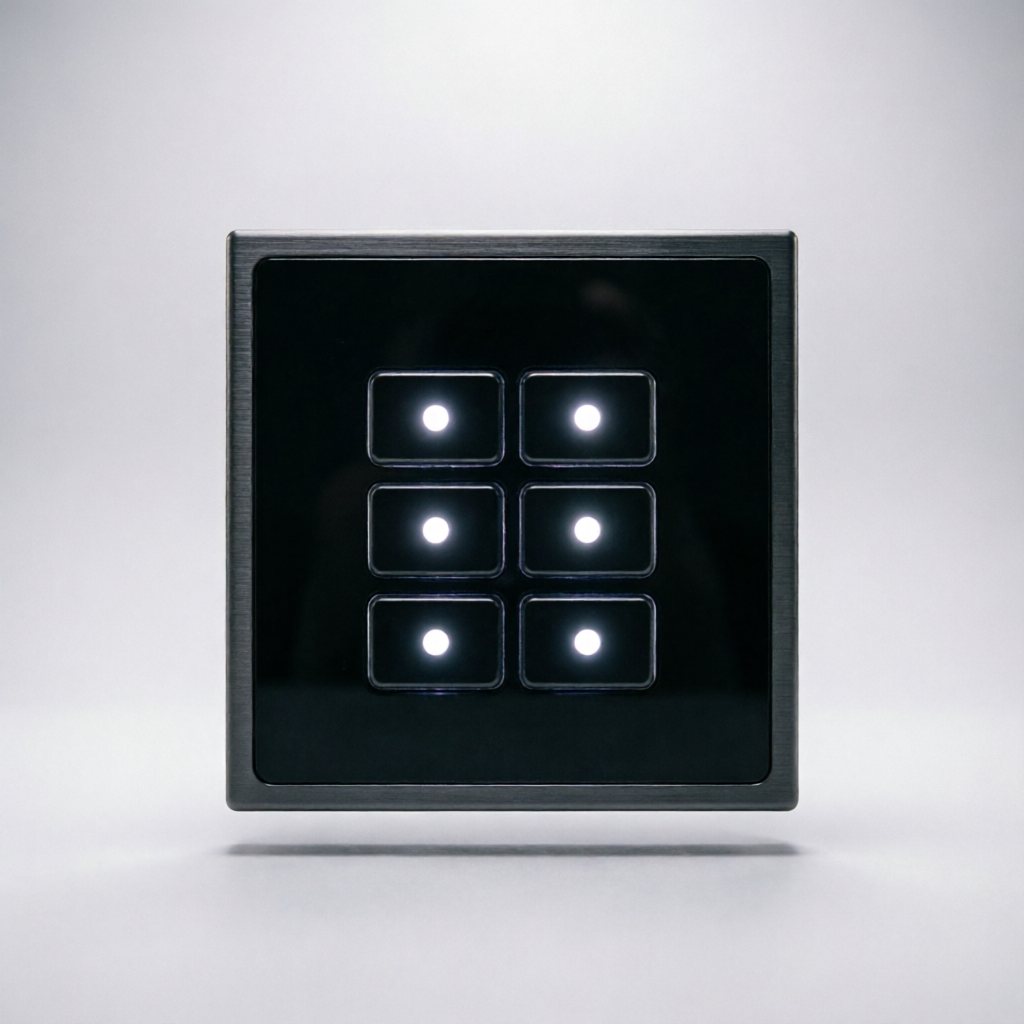
A request for "a custom shape" or "our own enclosure design" on a smart wall switch or scene panel is, in tooling terms, a request for a new mould — and a new mould is one of the largest single decisions in an OEM/ODM programme. It commits real tooling cost, adds real weeks to the timeline, and reopens the compliance question on a product that may have shipped cleanly on existing tooling for years. This is what actually goes into that decision before a first sample can exist.
Design files a factory needs to quote tooling
- 3D CAD files (STEP or native format) of the intended enclosure, not just a rendering or a photo reference.
- Wall thickness and draft angle considerations suitable for injection moulding — a purely aesthetic sketch usually needs a DFM (design-for-manufacture) pass before it is mouldable at all.
- Internal clearance requirements for the module, relay and any button/touch mechanism the enclosure must house.
- Target frame standard (86-type / EU / US / UK) if the mould must still fit a standard wall box.
The DFM step is not optional
Almost every custom enclosure concept needs a design-for-manufacture review before tooling starts — a shape that looks fine in a rendering can be genuinely un-mouldable, prone to warping, or unable to hold tolerance for a touch sensor without adjustment. Budgeting time for this review, rather than treating it as a rubber-stamp step, avoids a wasted first tooling cut.
Typical stages from concept to mass production
| Stage | What happens |
|---|---|
| Concept + DFM review | CAD refined for mouldability, internal clearances checked |
| Tooling fabrication | Mould cut — the largest single cost and lead-time item |
| T0/T1 sample rounds | First-shot samples checked for fit, function, cosmetic defects; often 1-2+ iterations |
| Functional + compliance validation | New enclosure/module combination re-validated for target certs |
| Mass production | Runs against the new tooling at agreed MOQ |
Exact tooling cost, lead time and MOQ vary by mould complexity and factory — our trading desk will confirm these figures against your specific design in the RFQ rather than quoting a generic number here.
Tooling ownership and single-factory risk
Clarify upfront who owns the mould once it is paid for, and whether it can be moved to another factory if needed — a mould that stays exclusively at one factory's site creates a dependency that is worth negotiating explicitly in the PO terms rather than assuming favourably.
Why a new mould reopens compliance
A different enclosure can change antenna placement, ventilation, or internal clearance in ways that affect the radio and safety testing a certificate was based on. A new mould is, from a compliance standpoint, closer to a new product than a variant of an old one — see Certifications for how this validation cycle differs from a cosmetic OEM change, and OEM vs ODM for how this fits the wider decision.
What to state in the RFQ
Attach CAD files if they exist, or describe the shape change in enough detail for a DFM conversation to start. State target frame standard, target market for compliance planning, and ask directly about tooling ownership terms before committing. If the goal is a colour or finish change rather than a shape change, check custom color and finish options first — it may not require new tooling at all.
Considering a custom mould?
Share your CAD files or concept sketch — our trading desk will scope the DFM, tooling and cert path before you commit budget.
Start RFQMold Economics: Thinking in Program Terms
A mold is a program decision dressed as a purchase. The tooling itself is a one-off, but its amortization, its revision path and its custody all run for the life of the product. Buyers evaluating a custom mold should therefore model three numbers, not one: the tooling cost, the per-unit cost advantage over the closest existing mold, and the break-even volume where the advantage pays back the tooling. The model routinely shows that the honest break-even sits further out than first enthusiasm estimates — which is exactly why the model is worth building before the deposit.
Two clauses protect the investment. Custody: state in writing that the mold belongs to you upon full payment and can be released to another production line on your instruction — this single sentence is what makes your tooling portable between factories. Revision rights: define who pays when the mold changes because your design changed versus because production engineering required it. Neither clause matters until it matters enormously. Buyers who intend to build a durable private-label line should treat mold custody language as a signal of supplier seriousness — factories planning long partnerships sign it without hesitation.
One practical gate before committing tooling spend: run the custom design past the factory existing mold library first. A surprising share of custom ambitions are achievable with an existing mold plus a customized face print, changed glass cutout or alternate finish — at a fraction of the cost and none of the lead time. The library review costs one meeting; the skipped mold has been known to fund an entire seasons marketing. Factories show libraries willingly to buyers who ask, and the best customization outcomes usually begin with the words: show me what you already have.
Timing is the last requirement on the list, and it is the one buyers skip. Molds arrive when they arrive; the honest calendar includes design freeze, tooling, first shots, sample rounds and revisions — and the launch date that survives is the one built on that sequence rather than beside it. State your market window at quotation and ask the factory to plan backwards from it in writing. A launch protected by a written calendar is the cheapest luxury in custom manufacturing, and the only one that cannot be ordered after the deadline.