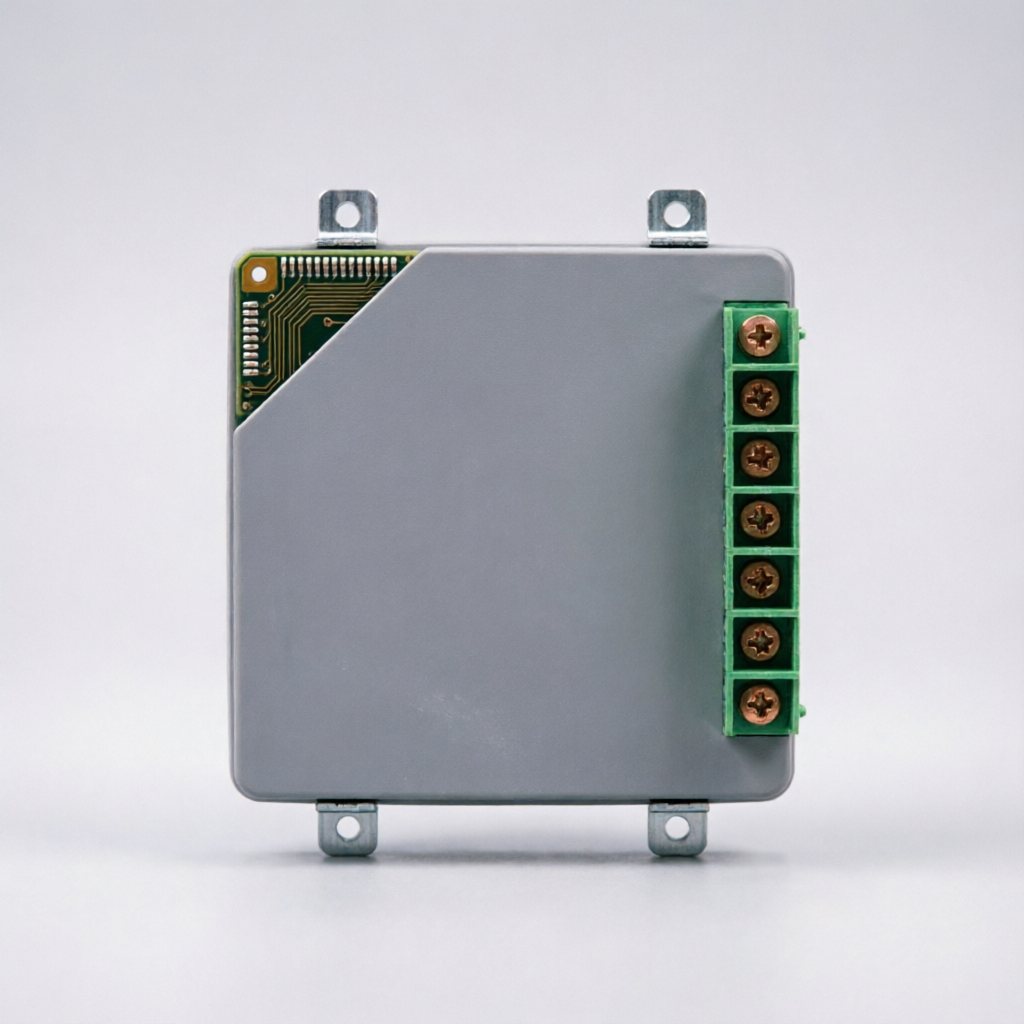
"What's the amp rating?" sounds like a simple RFQ field, but it hides three separate questions: the continuous rating of the relay on each gang, the total current the back-box wiring and plate can carry, and the inrush current a load draws for a few milliseconds at switch-on. Buyers who only ask for one number — usually "10A" or "16A" off a generic spec sheet — often end up with switches that trip, chatter, or age early on real-world LED and motor loads. This guide gives sourcing teams the vocabulary and the RFQ fields to close that gap before a factory quotes the wrong relay.
Continuous rating vs inrush rating
A relay's nameplate current (commonly 10A or 16A per gang on 100–240V wall switches) is a continuous, resistive-load number — the kind of steady draw you get from an incandescent bulb or a resistive heater. Real installs rarely look like that anymore. LED drivers, electronic transformers and small motors are capacitive or inductive loads: they pull a short current spike, sometimes several times the steady-state figure, in the first few milliseconds after the relay closes. A relay rated 10A continuous may still be listed with a lower LED-load figure (for example 3A or 5A LED) precisely because of this inrush behaviour. Ask the factory for both numbers, not just the headline continuous rating.
Per-gang vs total plate current
Multi-gang plates (2-gang, 3-gang, up to 6-button scene panels) do not simply add up their individual gang ratings into a safe total. The shared neutral bar, the internal PCB traces and the incoming supply terminal all have their own ceiling, which is usually lower than the sum of the gangs switched on at once. A 3-gang switch with three 10A relays is not automatically safe to run at 30A through the plate. Request the factory's stated maximum simultaneous load per plate, not just per gang, especially for scene panels feeding multiple circuits from one back box.
| Load type | Typical draw | What to check |
|---|---|---|
| LED bulb / driver | Low steady watts, high inrush | LED-rated current, not just resistive figure |
| Incandescent / halogen | Matches nameplate current closely | Straightforward — least risk |
| Small motor (curtain, fan) | High inrush, moderate running current | Motor-rated relay or dedicated curtain module (e.g. PL-CT-MOD-WIFI) |
| Multiple gangs, one plate | Sum of active circuits | Plate-level maximum, shared neutral limit |
Relay type changes the answer
Mechanical relays tend to tolerate higher inrush spikes than solid-state (triac) outputs but produce an audible click and eventually wear on contact life at high switching frequency. Triac-based dimming or zero-cross switching outputs run quieter and dim smoothly, but are more sensitive to inrush and to minimum load — some will chatter or fail to fully turn off with very light LED loads below their rated minimum. If a buyer's programme mixes dimming and simple on/off gangs on the same plate family, this is worth a direct question to the factory rather than an assumption carried over from a previous supplier.
No-neutral wiring changes the current budget too
Where a switch line has no neutral wire at the back box, a small bypass current has to flow through the load itself to keep the switch's own electronics powered — which quietly eats into the load's own operating margin, especially with low-wattage LED fixtures. This interacts directly with amp sizing: a no-neutral switch on a very light LED load can flicker even though its relay is nowhere near its rated current. See our companion piece on neutral vs no-neutral wiring for the wiring-side half of this problem.
Reading a factory datasheet correctly
A typical factory datasheet lists several current-related figures on one line, and it is easy to quote the wrong one. "Max switching current" usually refers to the resistive rating; "rated current" without qualification often means the same thing; a separate "LED load" or "capacitive load" figure, when present, is the one that matters for a room full of LED downlights. If a datasheet only lists one number with no load type specified, treat that as a gap to close with the factory before ordering, not as a safe default. Ask for the load type the number was tested against, and if the factory cannot answer, ask for the underlying relay's own component datasheet rather than the finished-product summary sheet — the component-level document almost always separates resistive and inductive/capacitive ratings clearly.
Sizing for growth, not just day-one load
Buyers speccing a hotel floor or an apartment block often size the switch to the fixtures installed on day one, then later add smart bulbs, a second curtain motor, or a small heater to the same circuit without revisiting the switch rating. Building in a reasonable margin — rather than speccing exactly to the installed load — avoids a second RFQ cycle when a tenant or hotel operations team adds devices later. This is a judgment call that depends on the building's renovation cycle and is worth raising directly with the trading desk rather than guessing at a margin percentage.
What to write in the RFQ
- Continuous resistive rating per gang (A) and rated voltage range.
- LED-load or inductive-load derated current, if the datasheet lists one separately.
- Maximum simultaneous current for the whole plate, not just per gang.
- Relay type: mechanical or triac/solid-state, and minimum load if dimming is involved.
- Neutral availability at typical install sites — see the linked wiring guide above.
- Target market's local wiring/breaker convention (e.g. 10A vs 16A vs 20A circuits), since a switch spec'd for one market's typical circuit may be undersized or oversized for another.
These fields also feed straight into certification scope — an RF module rated at one current class may carry a different test report than a higher-current variant of the same physical switch, so cross-check with your certifications checklist before finalising a BOM line.
Not sure which relay class fits your load mix?
Send us the device list per room (LED count, curtain motors, any dimming) and our trading desk will confirm the right relay class and plate configuration against factory datasheets.
Start RFQ