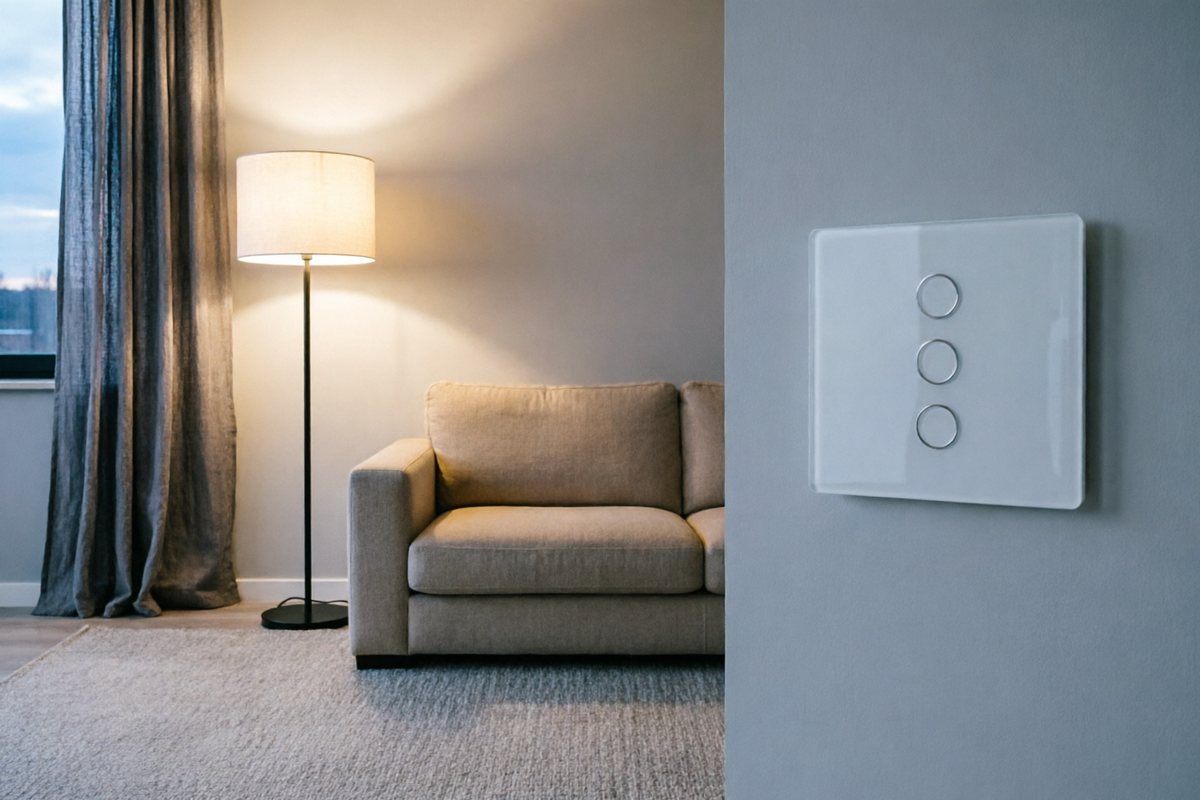
Residential · Distributor package

Whole-Home Smart Lighting — switches first, hub only when density demands it

Wall switches as the anchor SKUs, gateway and sensors added where the build actually needs them — a residential package distributors can quote per home type without over-speccing the hub.

Buyer typeResidential distributors, electrical wholesalers, smart-home retailers
Scope per home1-4 gang wall switches · optional gateway · optional PIR / door sensors · optional curtain module
Plate options86-type · EU · UK · US — matched to the destination housing stock
Protocol leanWi-Fi first for retrofits; Zigbee when sensors, density or private app enter the brief
App & voiceTuya / Smart Life or private label; Alexa and Google Home per market
Cert hooksCE / UKCA / FCC and others, confirmed per SKU against destination market
Quote basisHomes per phase × SKUs per home type (apartment / townhouse / villa)
Common pain points we solve

Where whole-home switch programmes go wrong

Each point is a lock-in field in the RFQ — decided before the order, not after the returns.

Sold as hub-free, returned as hub-needed

Wi-Fi switches sold into masonry-heavy or multi-floor homes choke the mesh, and the hub arrives as a rage purchase. The package decides the hub question per home type up front — see the gateway note in the hub guide.

Neutral-wire surprises on site

Older housing stock often lacks a neutral at the switch box. Installers discover it mid-job and improvise. The RFQ carries a wiring survey so neutral and no-neutral SKUs are mixed deliberately — background in the neutral guide.

Gang-count guessing

Buying 3-gang where the floor plan actually splits into 1+2 leaves dead wall positions and rework. BOMs are cut per home type from the plan, so the gang mix on the shelf matches the walls it will land on.

App fragmentation across rooms

Two app brands in one home doubles support tickets, and the switch gets blamed. One ecosystem per programme keeps pairing guides, firmware and spares aligned — the trade-offs sit in the Wi-Fi vs Zigbee guide.

Stock skew on the shelf

Fixed ratios ship 3-gang nobody buys while 1-gang sells out. The starter pack mixes cartons by gang count and replenishment follows sell-through, not the first order's guess.

Recommended configuration

Starting BOM per home — reference SKUs, confirmed against your spec

Reference family used across this site. Final mix depends on housing stock, wiring survey and app strategy in your RFQ.

ComponentReference SKU & spec starting pointInstall & wiringWhy it matters
Wall switches 1-4 gangPL-SW-T3-WIFI-86 (Wi-Fi, 86) · PL-SW-R2-ZB-EU (Zigbee, EU) · neutral required, no-neutral on requestStandard back box, per gang planThe traffic anchor — protocol decided once per housing stock, not per room
GatewayPL-GW-ZB-MTR · per floor when Zigbee density or remote access requires itCentral location, Ethernet preferredAdded only when the build justifies it — keeps BOM honest and margin intact
PIR sensorPL-SN-PIR-BAT · hallway, stair, bathroom pathBattery mount, no wiringOccupancy automation is the upgrade story that sells the switch range
Curtain module (optional)PL-CT-MOD-WIFI · open / close / stopBehind the switch position, motor load statedMotor loads change the SKU and rating — declared in the RFQ, not at install
Dimmer variant (optional)Trailing-edge dimmer per load listLED load type and minimum load statedDimmer on the wrong LED bank flickers — load list first, SKU second
Villa and apartment differ by density, not by brand: villas lean Zigbee + gateway for floor coverage; standard apartments usually stay hub-free Wi-Fi. State home types per phase so the desk quotes the right mix — see the planning guide.
Delivery highlights

Built for resale, not for one install

Protocol decided per housing stock

One decision per market or project phase — not per room. The protocol decision aid structures the call so the range stays on one ecosystem.

Starter pack + top-up structure

The first order ships as a mixed carton by gang count so the shelf is complete from day one. Replenishment follows sell-through per SKU, corrected every cycle instead of locked to the first guess.

Manual & app language set

Manuals, quick-start cards and app store listings matched to the destination market in the same pass as the cert pack — no second print run for the language you forgot.

Commercials & service

MOQ, timing and scale — confirmed, not advertised

MOQ per SKU, per print

MOQ moves with gang count, protocol module and private-label print. State quantity intent in your RFQ; our trading desk confirms factory-level MOQ in the reply based on final spec and destination market.

Sampling & production windows

Pre-production units and mass production dates are quoted against your locked spec — protocol, app brand, print and cert market all move the calendar. Confirm both windows in the RFQ before committing shelf dates.

Scale behind the desk

40+ partner factories · 8,000+ product SKUs · 50+ export markets · 95% on-time shipment · 12 years in export. One desk consolidates multi-factory lines into one packing list per shipment.

Plan the whole-home package in one RFQ

Send home types per phase, housing stock age, wiring survey, protocol lean and app strategy. The reply structures the BOM per home type with cert pack attached — priced on final spec.

Start the whole-home RFQ Planning guide Villa packages
FAQ

Questions distributors actually ask

Does every whole-home project need a gateway?

No. Hub-free Wi-Fi switches cover typical 2-4 bedroom stock where the router reaches every wall. Sensors, thick masonry, multi-floor villas or a private-label app requirement are the usual triggers that push the build to Zigbee with a gateway.

How do we decide Wi-Fi vs Zigbee for resale?

Decide once per housing stock, not per room. Wi-Fi suits retrofits with solid router coverage and no dealer-side hub; Zigbee suits dense builds, sensor add-ons and integrators who run their own hub. The Wi-Fi vs Zigbee guide walks the trade-offs in RFQ language.

Can we mix gang counts in one carton?

Yes. The starter pack is built as a mixed carton by gang count so the shelf carries 1-4 gang from day one; replenishment then follows sell-through per gang instead of a fixed ratio that drifts out of date.

What about older homes without a neutral wire at the switch?

No-neutral variants exist through partner factories and carry load-type limits. State housing age and the wiring survey in the RFQ so neutral and no-neutral SKUs are planned into the range, not discovered on the installer's van.

Related reading

Residential guides that pair with this package