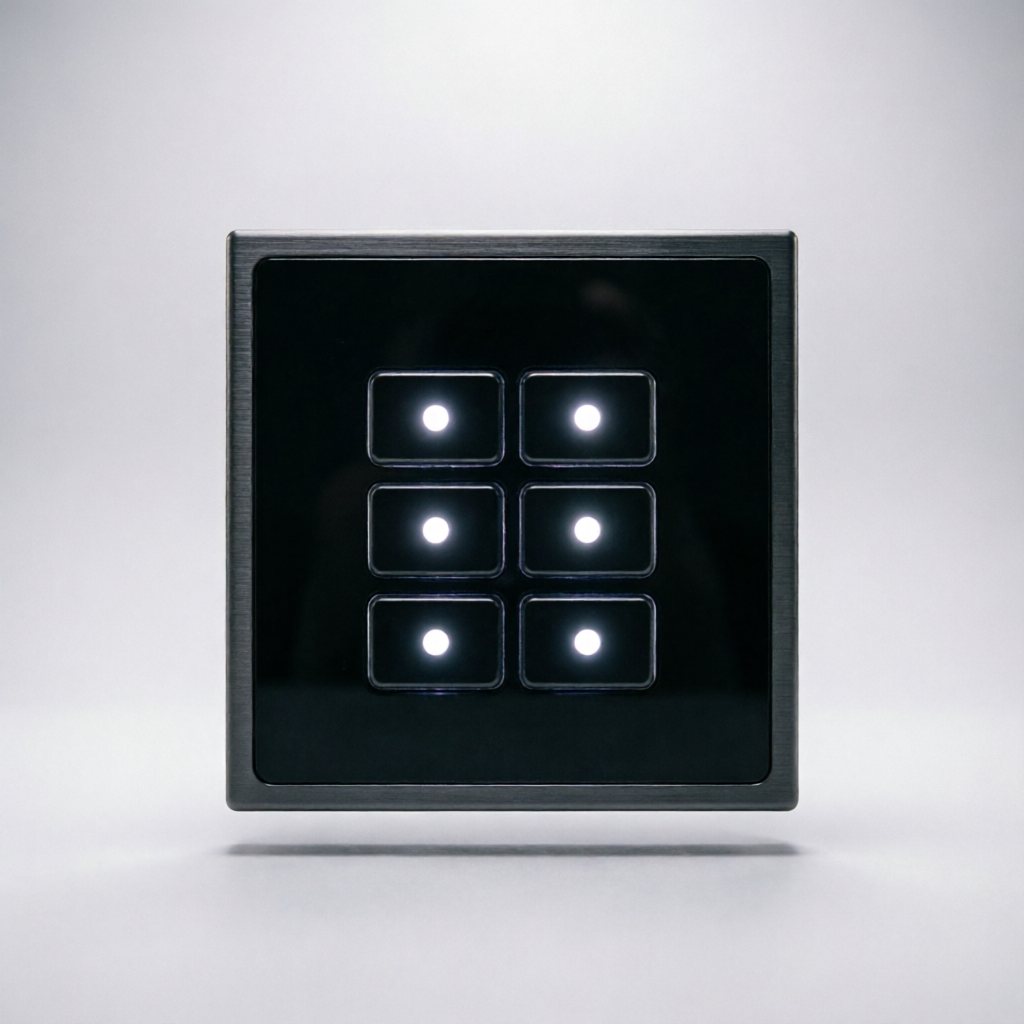
"Gang" simply means how many switch modules sit on one wall plate — but the term causes more RFQ confusion than almost any other spec, because it interacts with wall box size, wiring load per gang, and regional frame standards all at once. A buyer who orders "4-gang switches" without confirming the wall box and frame standard for the destination market often finds the plates do not fit the boxes already in the wall.
This confusion is compounded because the word "gang" is used slightly differently across markets and even across suppliers within the same market. In some regions it strictly means one physical switch module; in others, a "2-gang" plate might describe two modules on one faceplate but wired to a single shared box, or two separate boxes bridged by one cosmetic plate. Neither usage is wrong, but assuming a supplier means the same thing you mean without confirming it is a common source of on-site surprises during installation, especially on large multi-unit projects where the same mistake repeats across every room.
Why gang count isn't just "how many buttons"
Each gang on a panel typically corresponds to one controlled circuit (one light loop, one fan, one socket relay, or a scene button with no direct load). More gangs on one plate means more wiring terminated behind a single wall box, which raises two practical questions for any RFQ: does the destination wall box have room for that many conductors, and does the local frame standard (86mm China/Asia, EU 55mm module, US Decora, UK/BS) even support that gang count in one plate.
1-gang: the baseline
Single-circuit control — one light, one fan, one general load. This is the most universal configuration and the easiest to retrofit into any existing wall box, which is why it remains the highest-volume SKU across almost every export market regardless of protocol.
2-gang and 3-gang: room-level control
Common in bedrooms (main light + reading light) and living rooms (main light + accent + fan). These sit in the middle of the demand curve — popular enough to stock as standard SKUs, but variable enough in circuit assignment that buyers should confirm which gang controls which load type before finalizing a project order, especially for hotel corridors and guest rooms where the same plate design repeats hundreds of times.
4-gang and multi-gang scene panels
Beyond 4-gang, panels increasingly shift from "several independent switches" to "scene panel" — buttons that trigger pre-set scenes (all-off, movie mode, welcome) rather than each wiring a discrete load. This is where gang count and protocol choice start to interact: a Zigbee or Matter-ready scene panel can drive many virtual scenes from a small number of physical gangs, while a purely mechanical-relay approach needs one gang per physical circuit. See Protocols for how this affects hub requirements.
Gang count vs typical use case
| Gang count | Typical room / use | Wiring note |
|---|---|---|
| 1-gang | Hallway, bathroom, single load | Fits almost any regional wall box |
| 2-gang | Bedroom (main + accent light) | Confirm neutral availability per circuit |
| 3-gang | Living room (light + light + fan) | Check box depth for wiring volume |
| 4-gang+ | Master suite, hotel corridor, scene control | Often shifts to scene-button logic, not per-circuit relay |
Frame and box compatibility
Gang count only means something once it is paired with a frame standard. An 86mm 4-gang plate and a EU 55mm 4-module plate are not interchangeable, and neither fits a US Decora triple box without an adapter. Always confirm frame standard alongside gang count in the same line item — the product catalogue lists SKUs by both dimensions for this reason.
Planning gang mix across a project
On multi-unit projects — apartment blocks, hotel floors, office fit-outs — the gang mix across a floor plan is rarely uniform. A typical hotel guest room might specify a 1-gang bathroom switch, a 2-gang bedside panel, and a 3- or 4-gang entry scene panel, all on the same order. Planning this mix upfront as a single bill of quantities, rather than ordering each gang type separately as the project progresses, tends to get better volume pricing and avoids the situation where late-stage orders for a single missing gang type arrive after the main shipment, disrupting installation scheduling.
RFQ checklist
For each SKU, specify: gang count, frame/wall-box standard for the destination market, whether each gang controls a physical load or a scene, and neutral/no-neutral wiring per gang if the project mixes both. Getting this into one structured RFQ avoids the common rework of re-quoting after wall box mismatches surface on-site. For larger projects, submit the full room-by-room gang mix in one bill of quantities rather than splitting it into multiple smaller RFQs over time.
Planning a multi-gang order?
Send us your target frame standard and room plan — our trading desk will confirm gang layout and lead time based on your spec.
Start RFQGang Mix Forecasting: Ordering the Right Spread
Distributors rarely fail on gang availability; they fail on gang mix. A container of predominantly single-gang units serves apartments and under-serves the villas and hotel rooms in the same territory. The reliable way to forecast mix is from the building stock you actually sell into: count rooms by type, estimate switch positions per room type, and let the arithmetic produce the spread rather than intuition. The pattern repeats across markets surprisingly consistently, which is why experienced importers keep a mix history and adjust it once a season rather than once a container.
The second-order questions follow the mix. Multi-gang plates carry different glass sizes, back box depths and print layouts, so spares and packaging should be planned per gang class, not per order. And scene panels complicate the picture deliberately — a four-gang scene keypad serves a different purpose than a four-gang light switch even in the same frame family. When your RFQ states the mix as a percentage split with quantities, suppliers can flag unrealistic assumptions early; a desk that consolidates across product lines will also catch the cross-family detail, like finish matching between your single-gang stock and your multi-gang panels, before it becomes a shelf-appearance problem.
A closing note for buyers serving mixed markets: gang naming conventions differ, and the RFQ should carry a dimension sketch, not just a word. What one market calls a two-gang plate, another calls by its frame size, and a third by its switch positions — and quotes have been lost to exactly this ambiguity. One photograph or line drawing of the plate you want, attached to the RFQ, aligns every factory on earth. The habit costs nothing and removes the most common quotation misunderstanding in the category.