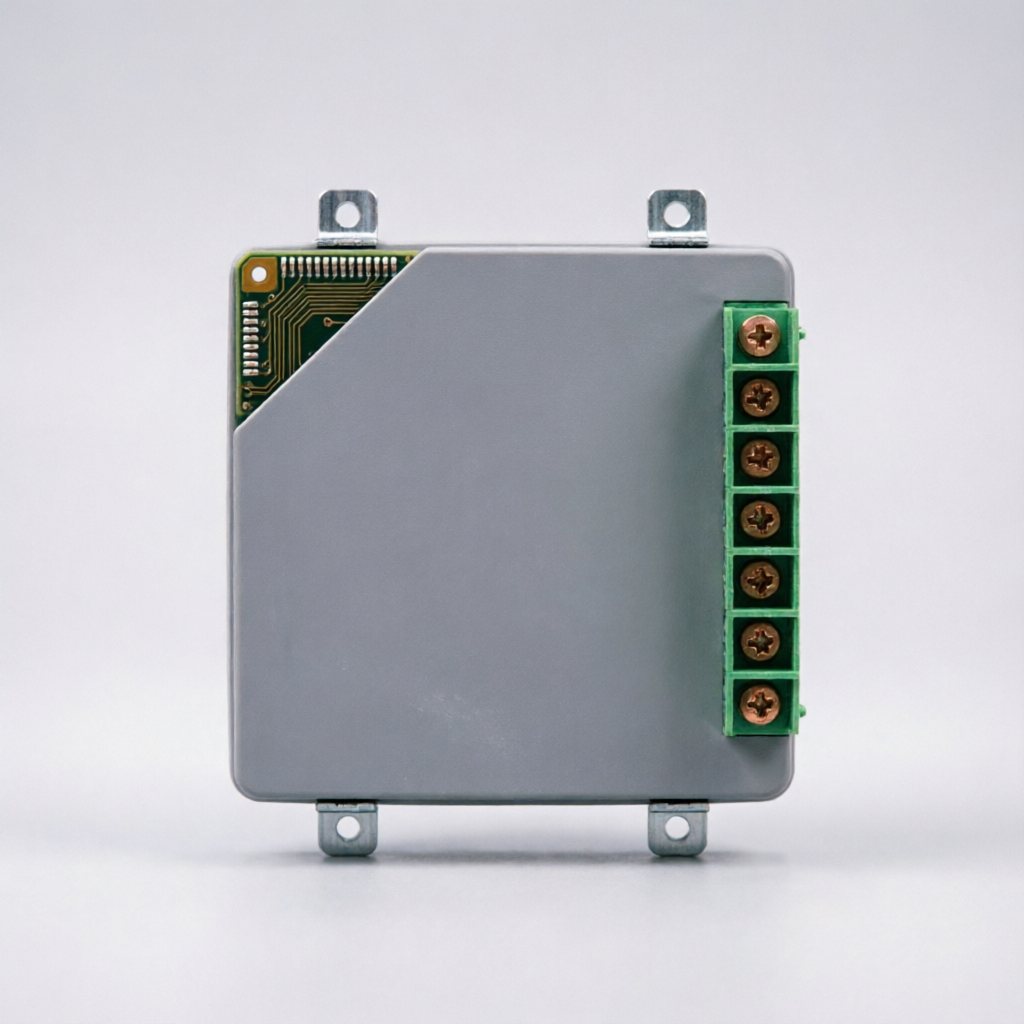
Two smart switches that look identical on a spec sheet can carry very different quotes, and the reason is almost never that one supplier is padding margin. It is that "smart wall switch" is a shorthand for a bundle of independent cost layers — materials, electronics, certification, customization and logistics — and each layer moves on its own variables. This article breaks down those layers conceptually so a buyer can read a quote and know what is actually driving the number, without us inventing specific prices that vary by spec, volume and destination market and must be confirmed in your RFQ.
This matters most at the negotiation stage, where a buyer who understands the cost layers can ask targeted questions instead of simply pushing for a lower number across the board. Asking "which of these five layers is the biggest driver in this specific quote" gets a more useful answer than asking "can you go lower," because it lets the supplier tell you honestly where flexibility actually exists — sometimes in the tooling layer, sometimes in the logistics layer — rather than absorbing an across-the-board cut into a corner that later shows up as a quality or compliance shortfall.
Layer one: the bill of materials
The panel face (tempered glass vs PC/plastic — see the companion glass vs plastic comparison), the relay type and rating, the PCB complexity, and the protocol module (Wi-Fi, Zigbee, or a Matter-ready chipset) all sit in this layer. Glass costs more than plastic; a Zigbee module with mesh capability typically costs more than a basic Wi-Fi module; higher-current relays for heavier loads cost more than standard ones. None of this is supplier-specific — it is physics and component sourcing.
Layer two: certification and compliance
Every market a switch ships to requires its own compliance mark — CE for the EU (and, as of 2026, still recognized for 21 key regulations in the UK market), FCC for the US, UKCA for Great Britain, and increasingly Matter certification for cross-ecosystem compatibility. Matter certification for a device family runs roughly 8–12 weeks and around USD 15,000–30,000 according to Connectivity Standards Alliance figures — a useful reference point for how significant this layer can be, and why it is normally amortized across a large production run rather than charged per unit at small volumes. The full picture across CE/FCC/UKCA is covered in the companion certification cost article.
Layer three: volume and customization
Tooling for a custom panel shape, app rebranding for private label, and minimum order quantities all shift the per-unit economics without changing the base hardware. A stock SKU ordered at standard volume carries none of this; a private-label SKU with custom tooling carries all of it, amortized across however many units are ordered. See the MOQ economics article for how minimums are actually set.
Layer four: logistics
Freight mode (sea LCL, full container, air), carton utilization, and whether the shipment consolidates multiple product lines (switches, sensors, gateways) all affect landed cost independently of the FOB unit price. A well-consolidated shipment across a trading desk's factory network can meaningfully change landed cost even when the FOB quote is unchanged — detail in the freight and consolidation article.
Relative weight of each layer
| Cost driver | Relative weight | What moves it |
|---|---|---|
| Bill of materials (panel, relay, protocol module) | High | Material choice, radio/chipset spec, load rating |
| Certification & compliance | Medium-High | Target markets, whether Matter is included, testing scope |
| Customization & tooling | Medium | Private label vs stock SKU, order volume |
| Logistics | Medium | Freight mode, consolidation, packaging fragility |
| Standard packaging & QC | Low | Largely fixed regardless of the above |
Reading a quote line by line
When a quote arrives, it is worth mapping each line back to one of the five layers above rather than reacting to the total figure alone. If a competitor's quote is lower, the most productive next step is identifying which layer accounts for the gap — a cheaper protocol module, a smaller certification scope, lighter packaging — rather than assuming the lower number is simply better value. In practice, unexplained gaps often trace back to certification scope or packaging fragility, both of which have real downstream costs (compliance risk, breakage in transit) that do not show up until later.
What to put in the RFQ so quotes are comparable
The single biggest reason two quotes for "the same switch" come back far apart is that they are quietly quoting different bundles — one includes Matter certification and reinforced glass packaging, the other does not. State panel material, protocol, target market certifications, order volume, and branded vs private label explicitly in one RFQ. Our trading desk will confirm the actual figures based on your spec — that is the only way to get a number that means anything, rather than a range that assumes the wrong bundle.
Want a quote you can actually compare?
List your material, protocol, target market and volume in one RFQ so the return quote reflects your real bundle, not a generic one.
Start RFQUsing the Cost Map in Negotiation
Knowing where cost lives changes negotiation from haggling to engineering. When a quote must come down, the map tells you which levers exist: face material tier, glass to polycarbonate; gang count mix, fewer multi-gang units; protocol family, where simpler variants undercut hub-dependent ones on module cost; customization tier, print instead of an app build; packaging specification, bulk inners instead of retail cartons on the trade portion. Each lever has a quality or positioning consequence, which is precisely why the map matters — it prices those consequences instead of discovering them after the discount.
The reverse use is quieter but more valuable: defending a price. A buyer who can say which line is the certified-module version, which is the packaging specification, and which is the print tier is buying transparency, and suppliers quote more carefully to transparent buyers. Over reorder cycles, the mapped quote also exposes drift — the line item that crept, the certificate assumption that changed. A desk that consolidates across factories sees cost maps daily and will benchmark your quote against the family norm without being asked; that outside view is one of the quiet returns of consolidated sourcing, and it compounds over every reorder.
The breakdown should be refreshed annually alongside your quotes, because the cost map itself moves: module prices, glass supply, certification fees and freight each drift on their own cycle. The buyers who re-map yearly negotiate from the current map rather than the one they learned on, and the difference shows in the first quote of every new season. Cost knowledge is perishable; the habit of refreshing it is the only durable version, and it costs one afternoon per year to maintain.