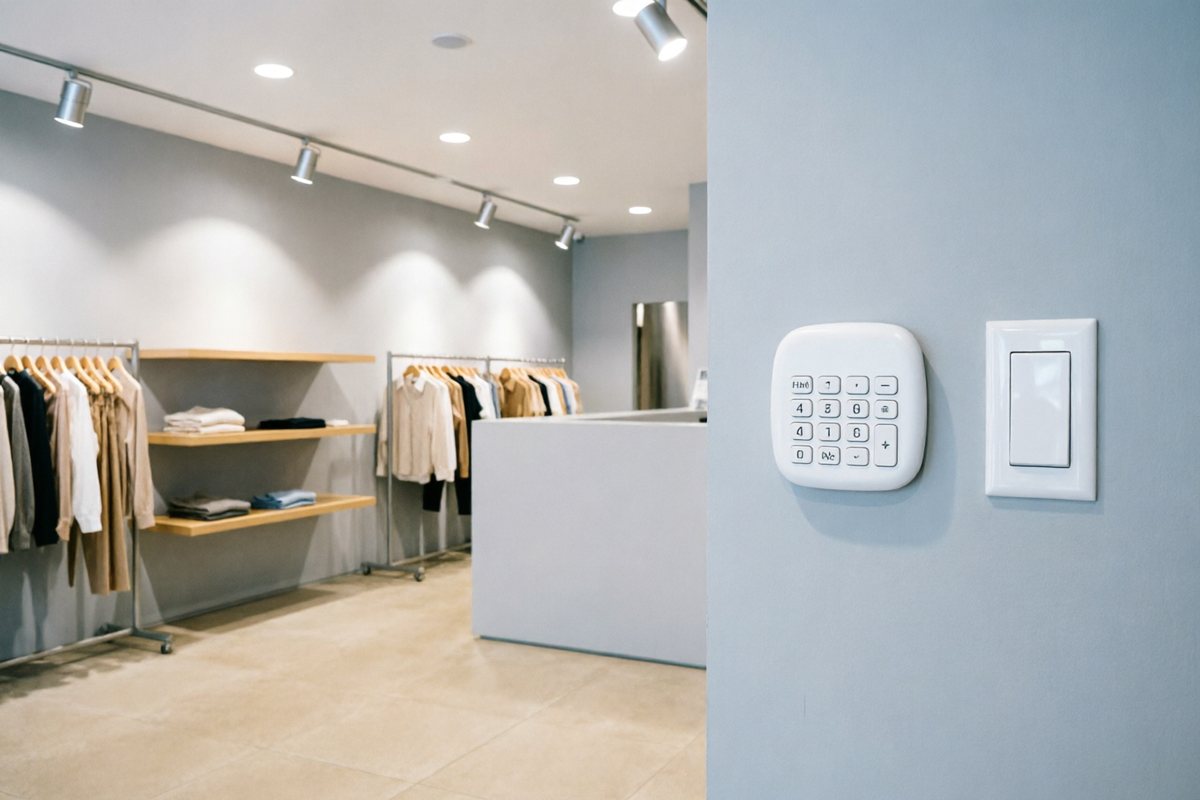
Every distributor who has tried to get a new category onto a hardware store or electrical wholesaler's shelf knows the pitch has to answer one question fast: why should this replace something that already sells and never gets returned? Traditional wall switches are a mature, low-margin, low-drama category. Smart switches ask a retail buyer to take on more SKU complexity, more customer questions, and a higher price point. The case for doing it anyway has to be built on more than "smart is the future" — it needs numbers, objections answered in advance, and a floor-set story the retailer's own staff can repeat.
The pitch also needs to survive a second, harder question: what happens to this category in twelve months if the retailer commits shelf space now? A traditional switch aisle never changes — the SKU a store stocked five years ago still sells today. A smart switch category buyer is being asked to bet on a moving target: protocols evolve, app ecosystems consolidate, and voice-assistant compatibility keeps expanding. The honest answer is that this volatility is exactly why the category rewards early movers with better shelf position and supplier relationships once it matures, and why waiting for it to "settle down" usually means arriving after competitors have already trained the customer base.
Why this conversation is happening now
The smart home category is not a niche any more. Industry sizing places the global smart home market at roughly USD 180.1 billion in 2026, with projections reaching around USD 848.5 billion by 2034. That growth is not concentrated in gadgets and hubs alone — wall control (switches, panels, dimmers) is one of the categories riding it, because it replaces something every building already has, rather than asking for a new install. For a retailer, that is the difference between "another accessory aisle" and "a walk-in replacement for a fixture that fails or gets renovated anyway."
What retailers actually ask before adding a new category
- Will customers understand it without a salesperson? App pairing and voice assistant compatibility (Alexa/Google-class ecosystems, increasingly Matter-certified lines) matter more to a retail buyer than radio protocol detail.
- What is the return rate risk? No-neutral wiring mismatches and hub confusion are the two most common return drivers reported by importers — both are solvable with clearer packaging and installer guides, not by avoiding the category.
- Does it cannibalize an existing SKU or add a new margin line? Positioned correctly, smart switches sit above traditional switches rather than replacing the electrical aisle's baseline SKU.
Traditional switch economics vs smart switch economics
| Factor | Traditional switch | Smart switch |
|---|---|---|
| Category maturity | Flat, replacement-driven demand | Growing, renovation + upgrade-driven demand |
| Attach-rate potential | Standalone | Pairs with sensors, gateways, curtain motors — basket size grows |
| Customer education need | None | Moderate — app, protocol, voice assistant |
| After-sales load | Near zero | Some — wiring and pairing questions; manageable with good documentation |
| Shelf story | Commodity | Differentiated — "smart home starter point" positioning |
Objections and how to answer them
Three objections come up in almost every retailer conversation. First, "our customers don't want another hub." Answer: Wi-Fi lines exist precisely for hub-averse buyers, and a mixed range (see the site's Protocols comparison) lets the retailer stock both without forcing a choice on the shelf. Second, "wiring in older buildings won't support this." Answer: no-neutral variants exist for exactly this reason and should be called out on packaging, not left for the installer to discover. Third, "it's a premium item that needs premium retail theatre." Answer: a working display panel wired to a real relay does more to sell the category than a spec sheet — most importers ask for a demo unit in their first RFQ for this reason.
Where private label and OEM fit into the pitch
Retailers with their own brand equity — regional electrical chains, e-commerce private labels — often get more traction pitching a white-label or private-label line than a third-party brand, because it protects their own margin and customer relationship. PanelLink's trading desk works across more than 40 partner factories and moves over 8,000 SKUs into more than 50 export markets, which is the kind of breadth that supports building a retailer-specific range rather than a single generic SKU. See the OEM/ODM page for how that process is structured.
Building the floor-set story staff can actually repeat
A pitch that only works in the boardroom fails on the sales floor if store staff cannot explain it in one sentence. The most durable floor-set stories tend to follow a simple structure: "this replaces the switch you already have, adds app and voice control, and still works if the customer never opens the app." That framing sidesteps the two most common shopper hesitations — fear of complexity and fear of being locked into a subscription or hub they did not ask for. Retailers who train staff on this one-line pitch consistently report fewer abandoned baskets at the point of sale than those who leave staff to explain protocol differences unprompted.
What to put in the RFQ when building this pitch
Before quoting a retail buyer a landed price, get your own sourcing numbers locked: protocol mix (Wi-Fi/Zigbee/Matter-ready), panel material, gang configurations needed for the target market's wall boxes, and whether the line will carry your brand or a private label. State all of this in one RFQ so the trading desk can quote a coherent range rather than piecing together mismatched SKUs. It is also worth asking for point-of-sale materials (a working demo panel, simple comparison cards) as part of the same RFQ, since a category this new sells far better with something tangible on the counter than with a spec sheet alone.
Building a retailer pitch deck?
Ask for a sample range spanning entry, mid and premium tiers so your pitch has real product to show, not just a catalogue page.
Start RFQ