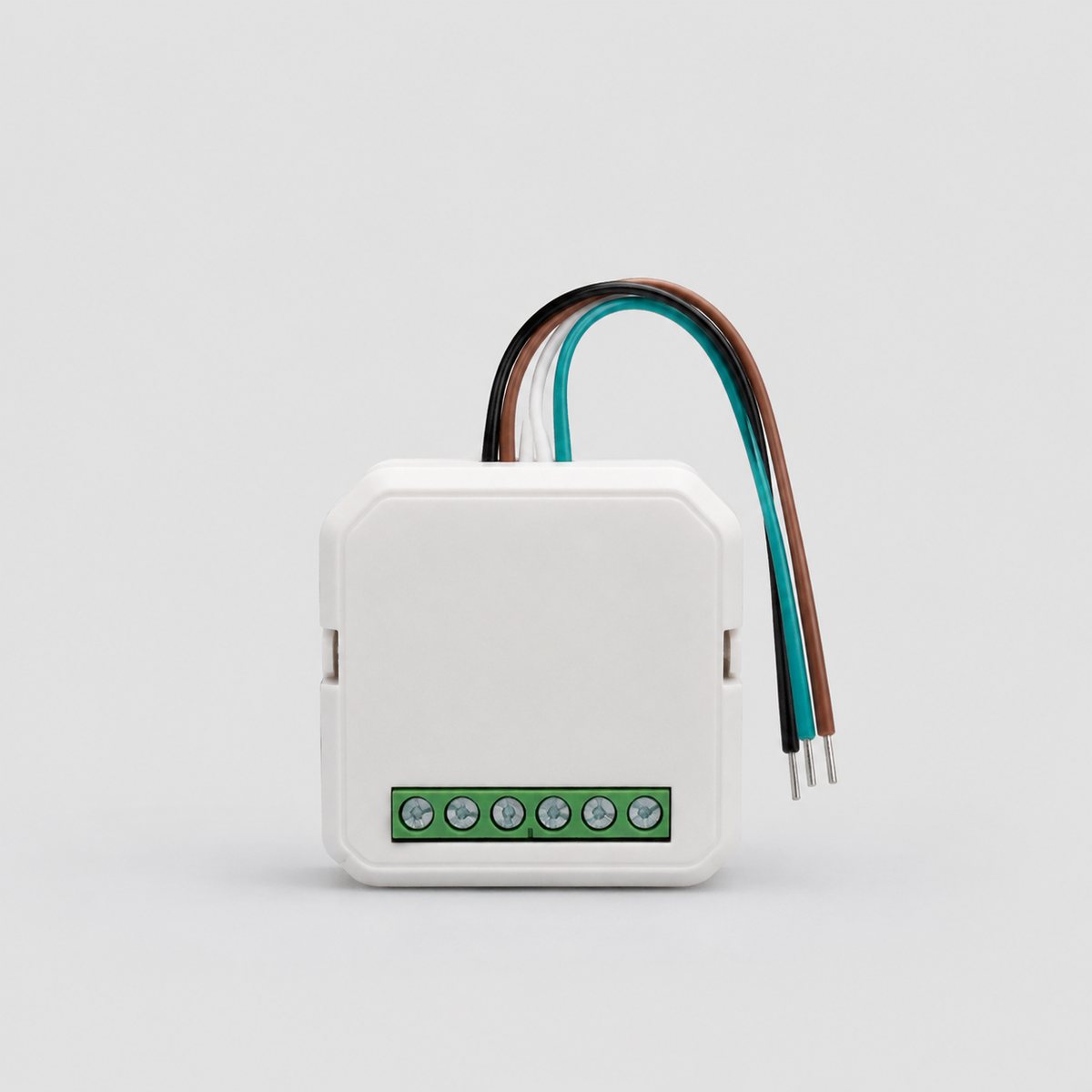
Voltage and frequency look like the simplest field on a smart switch spec sheet, and it is the one buyers most often leave to assumption. A module built for one grid standard can still power on, pair to an app, and pass a quick bench test in a market with a different standard — and then fail intermittently once it is installed at scale. This is a field to specify exactly, every time, not to infer from where the factory happens to be based.
The global grid landscape, in short
Most of the world runs on 220–240V at 50Hz, covering Europe, most of Asia, Africa, Australia and much of Latin America. North America and parts of Central America and the Caribbean run on 100–127V at 60Hz. Japan is a notable exception at around 100V, split between 50Hz and 60Hz depending on the region. A handful of markets mix standards at the grid level in ways that matter for switch design, which is exactly why this cannot be treated as one universal rating.
Why the mismatch does not fail cleanly
A relay-based or capacitor-drop no-neutral switch designed around one voltage and frequency band can often still function outside its intended range for a period of time — which is worse than an outright failure, because it means faults surface gradually: relay chatter, premature component wear, unexplained resets, or shortened product life. By the time a distributor connects the pattern to voltage mismatch, dozens of units may already be installed.
Mistakes that lead to this happening
- Assuming a factory's "universal input" claim covers both frequency and the full voltage range you need, rather than confirming the tested range in writing.
- Ordering the same SKU into two markets with different grid standards without checking whether the electrical design is actually shared or needs a variant.
- Treating voltage as a plug-and-adapter issue rather than an internal component rating issue — a plug adapter changes the physical connector, not the switch's tolerance for the incoming power.
How to specify this correctly in your RFQ
| Field | What to state |
|---|---|
| Voltage | Exact range for your destination grid, not "standard" or "universal" |
| Frequency | 50Hz or 60Hz, confirmed against destination grid, not assumed from factory location |
| Multi-market orders | State each destination separately if grid standards differ across your markets |
| Certification tie-in | Confirm the certification mark covers the specific voltage/frequency combination ordered |
Where this connects to your certification and datasheet checks
Voltage and frequency rating should match what is stated on the certification documentation for the SKU — a mismatch between the two is a sign the certification may not actually cover the configuration you are ordering. Cross-reference this against the datasheet fields covered in our datasheet reading guide, and see our Certifications page for how marks map to specific electrical ratings.
Selling into more than one grid standard?
Tell us your destination markets — our trading desk will confirm the correct voltage and frequency configuration with the factory before production.
Start RFQWriting Voltage Into Documents So It Cannot Be Missed
Voltage requirements fail in the gaps between documents, so the fix is to write the requirement into every layer. The RFQ: the full operating range as a line, not a hope. The quotation: the same line repeated in the supplier's specification, so acceptance is explicit. The sample label and datasheet: the range printed where a customs officer or a channel auditor will look. The purchase order: restated beside the model number. Each repetition costs one line; the failure it prevents is a container of products that power on happily and quietly mis-rate at the edges of your market's grid.
The same discipline covers the neighbors of voltage: neutral requirement, minimum load for dimmers, maximum load per gang at your voltage, and frequency-sensitive accessories like curtain motors. Write the destination country into the document too, because suppliers hold market-specific variants and will often swap to the correct one for free if told early — and cannot, if told late. A desk consolidating multi-market orders applies this document discipline as routine and will catch the mismatch between what you wrote and what the factory assumed; that catch, invisible when it happens, is one of the concrete ways consolidated sourcing pays for itself.
The market-data half of the discipline lives in one maintained table: destination market, nominal voltage, range tolerance, frequency, neutral convention. One row per market you serve, sourced once from your local partners and reviewed yearly. With the table beside the RFQ template, writing the correct voltage line becomes a lookup rather than a memory test — and the lookup is the difference between the order that installs cleanly in three markets and the order that becomes a case study in assumptions.
The sample stage carries the voltage verification physically: read the label on the actual sample, not the datasheet on the screen. Labels are what customs officers photograph and what installers consult on the ladder, and label errors — a single-market rating on a universal-range order — have shipped in otherwise perfect containers. One photograph of the sample label, filed beside the specification line, closes the voltage loop from document to product. The loop is two minutes long and it is the entire difference between specifying voltage and receiving it.