"What does it cost to go private label" is usually asked as if there is one number. In practice, private label is a bundle of separate investments — tooling, app and cloud branding, certification, packaging design, and a minimum inventory commitment — and each one can be taken on at a different pace. Understanding the bundle, as distinct from white-label or branded resale, is what lets an importer plan a realistic first step instead of assuming it is an all-or-nothing commitment.
What "private label" actually bundles
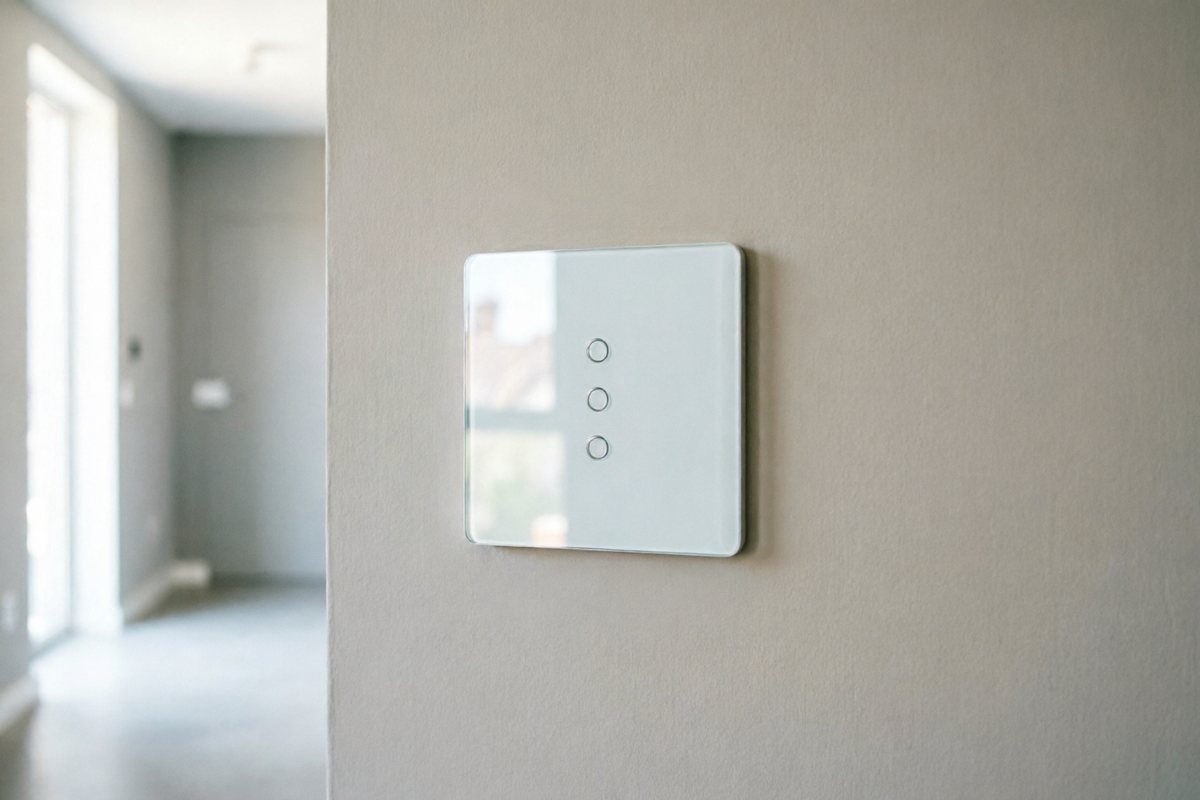
At minimum, private label typically involves rebranding the mobile app (name, icon, splash screen, sometimes a dedicated cloud instance), custom packaging and printed materials carrying the buyer's brand, and often a distinct panel-face branding element (a logo etched or printed on the switch itself). A fuller private-label program goes further into custom panel tooling, colour/finish exclusivity, and sometimes a dedicated certification filing under the buyer's own brand name rather than the base manufacturer's.
The investment categories
- Tooling / mould: only needed if the panel shape or finish is genuinely new — reusing an existing platform's tooling avoids this entirely.
- App and cloud branding: renaming and re-skinning an existing app on a shared platform (Tuya-class ecosystems support this) is far lighter than building a dedicated app and backend.
- Certification: if the certification is filed under your brand name specifically, it typically needs its own filing even on an otherwise identical hardware platform — see the certification cost article.
- Packaging and marketing collateral: box design, manuals, and retail-ready photography — a one-time design cost, then a per-unit printing cost.
- Minimum inventory: tied to the MOQ that any new tooling or certification filing pulls in — see the MOQ economics article.
One-time vs recurring
| Investment category | One-time or recurring | What affects the size |
|---|---|---|
| Panel tooling/mould | One-time (per design) | Whether shape is new or reuses an existing platform |
| App/cloud rebranding | Mostly one-time, small recurring cloud fee possible | Shared platform reuse vs dedicated build |
| Certification filing | One-time per SKU revision | Number of target markets and whether Matter is included |
| Packaging design | One-time design, recurring print | Number of SKUs needing distinct packaging |
| Minimum inventory | Recurring per order cycle | MOQ set by tooling and certification above |
How to phase the investment
The lowest-risk entry point is app and packaging rebranding on an existing tooling platform — this gets a brand identity onto the shelf without committing to new mould costs or a fresh certification filing. Panel tooling and dedicated certification are the investments worth deferring until sales data justifies them. This staged approach is common enough that it is worth stating explicitly in an RFQ rather than assuming a factory will propose it unprompted.
Where the OEM/ODM desk reduces risk
Working through a trading desk with access to multiple factories rather than a single manufacturer gives more room to reuse existing tooling across a private-label range — the same underlying platform can often carry different brands' app skins without triggering new mould costs. See the OEM/ODM page for how this is structured across the network.
RFQ checklist
Specify which layer of private label you want at this stage (app/packaging only, or full tooling), your target markets for certification, and your realistic first-order volume. Our trading desk will confirm the actual investment breakdown based on your spec — there is no standard figure that applies across every brand and market.
Considering your first private-label run?
Tell us which layer you want to start with — our trading desk will confirm what can reuse existing tooling and what needs a new investment.
Start RFQA Budget Line Model You Can Defend
Private-label budgeting becomes defensible when it is a line model rather than a number. Lines: unit cost times first quantity; customization at the chosen tier covering print, packaging and app naming; certification for the destination market on the chosen SKU; sample and freight; and a channel-launch allowance. Each line has a decision behind it, which means each line can be challenged — the model shows whether the brand ambition is what drives cost or whether one line quietly dominates. Most first budgets fail on one line: certification nobody scoped, or an app tier chosen for its brochure.
The discipline that keeps the model honest is separating one-time from recurring. Tooling, certification and artwork are one-time; cloud service terms, app maintenance and restock freight recur — and the recurring lines are what decide whether year two is profitable. Present the model in that split and the investment conversation with your own stakeholders changes character: the debate stops being about expense and becomes about which lines you are ready to carry. A consolidating desk helps here too, because it prices multi-line orders as one program and will have seen which line items surprise first-time private-label buyers most often.
One modeling refinement pays for itself immediately: build the budget at two volume scenarios rather than one. The first-order quantity and the steady-state reorder quantity carry different unit economics, different freight terms and often different customization costs, and a budget that shows both tells you whether the launch price you can afford supports the reorder price the market will accept. The gap between the scenarios is where private-label programs succeed or strain, and seeing it early turns a funding question into a pricing strategy.