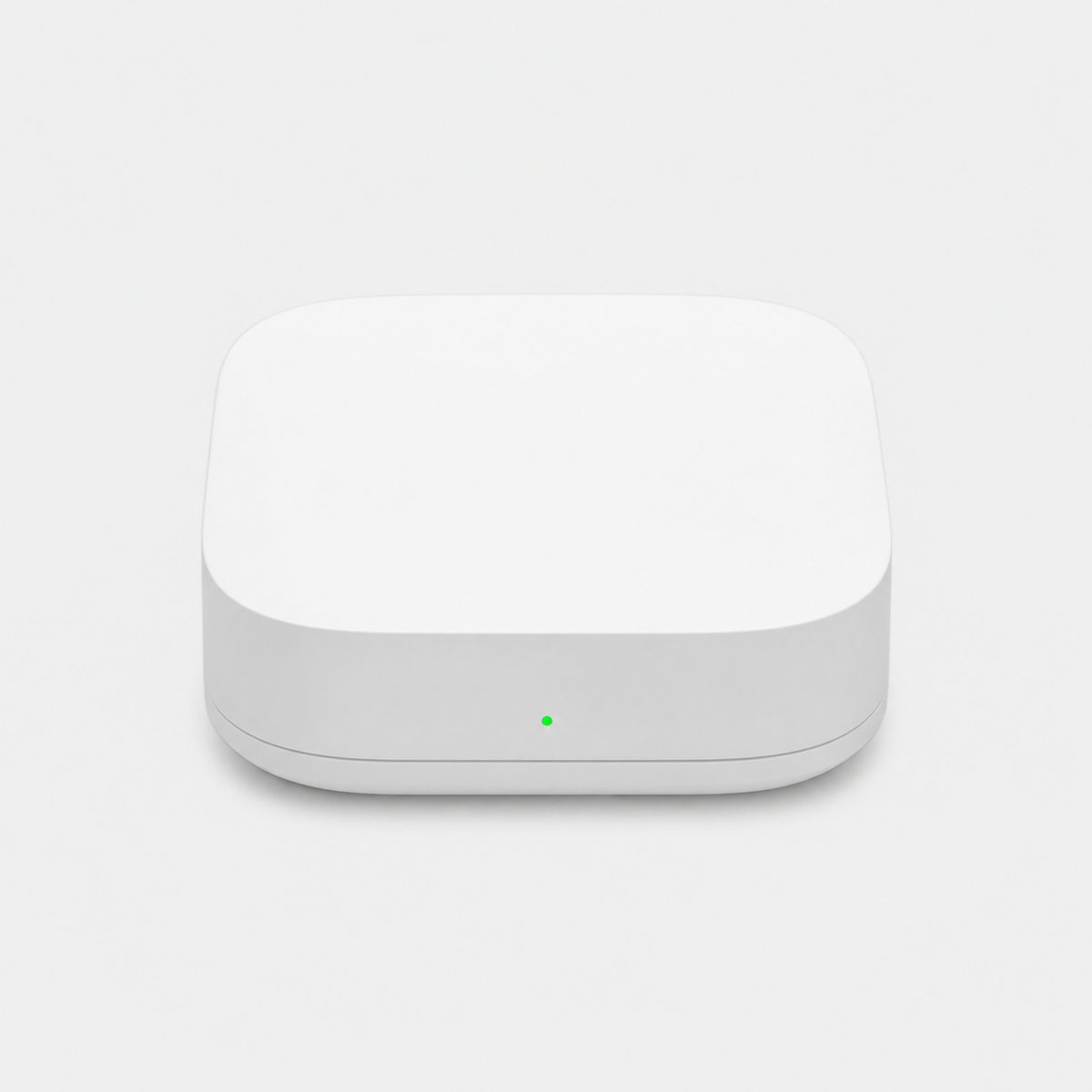
A full smart-home program rarely means "switches." It usually means switches, a gateway, a handful of sensors, curtain modules and maybe a socket line — five or six product categories that may not share a factory, a lead time or even a packaging standard. Buyers who RFQ each category separately end up managing five supplier relationships, five shipping schedules and five sets of paperwork for what is, from the end customer's point of view, a single room automation kit. Consolidating the RFQ is mostly a documentation and coordination exercise, and it pays off most on repeat orders once the BOM is stable.
Why categories end up on different production lines
Switches, sensors, gateways and curtain modules involve different manufacturing processes — injection-molded faceplates and relay assembly for switches, small battery-powered PCB assembly for sensors, more complex radio/software integration for gateways, and motor-adjacent electronics for curtain modules. A single factory rarely runs all four well; most B2B suppliers either specialize in one or two categories and buy the rest in, or work with a small network of partner factories to cover the full range. This is normal and not a red flag — the practical question for the buyer is whether the trading desk managing the RFQ can hold all categories to one quality bar and one delivery schedule, not whether one factory built everything.
What "one BOM" actually requires
- A single item list with consistent units: Every SKU, quantity, and per-unit spec (protocol, voltage/frame type, color) in one document, not scattered across category-specific RFQs.
- One packing list logic: Confirm upfront whether items ship in per-room kits (one carton containing everything for a single room) or by product category (all switches together, all sensors together) — this changes the packing list structure and affects how easily on-site installers can work room by room.
- Protocol consistency across categories: As covered in the companion pieces on leak sensors and curtain modules, every device in the BOM should match the same gateway/protocol unless there is a specific reason for a mixed stack — check this at BOM assembly time, not after each category has already been separately quoted.
- One point of contact for the whole BOM: A single trading desk contact who can answer questions across all categories, rather than the buyer having to triage which supplier owns which question.
Timing and lead-time alignment
| Category | Typical lead-time driver |
|---|---|
| Switches / panels | Faceplate tooling (if custom) and certification lead time for the target market |
| Gateways | Firmware/app integration testing alongside the rest of the BOM |
| Sensors | Usually shortest lead time; battery and radio module sourcing |
| Curtain modules | Motor-compatibility confirmation, covered in the curtain modules guide |
The category with the longest lead time sets the shipment date for the whole consolidated order unless the buyer explicitly asks for split shipping. Since our trading desk does not have a single published lead time across all categories, confirm expected timing per category in your RFQ rather than assuming a uniform number — it will vary with the specific SKU mix.
Certification and paperwork consolidation
Different product categories may carry different certification marks or test reports depending on the target market — see the general landscape on the Certifications page. A consolidated shipment still needs each category's certification documentation to travel with it; ask the trading desk to compile one certification package covering every SKU in the BOM rather than chasing separate paperwork per category after the fact.
Change management once the BOM is running
Consolidation pays off most once the BOM is stable and repeat orders start flowing — but changes still happen: a market adds a new certification requirement, a sensor SKU gets superseded by a new revision, or the buyer wants to swap one category's supplier for a better lead time. On a consolidated order, a single change to one category can ripple into the packing-list logic and shipping schedule for the whole BOM if it is not communicated clearly. The practical habit that avoids this is versioning the BOM explicitly — treating each confirmed item list as a dated reference point, and having the trading desk confirm which version is currently active before every reorder — rather than assuming the last shipment's mix is still correct. This matters more as the number of categories in the BOM grows, since a five-category order has more points where a quiet substitution could go unnoticed until the shipment arrives.
What to specify in the RFQ
List every product category and quantity in one document, state the packing preference (per-room kit vs. per-category), confirm protocol consistency across the whole BOM, and ask whether split shipping is acceptable if one category's lead time runs long. This groundwork also makes it easier to compare a trading platform against a single factory for this kind of multi-category order, since the coordination overhead is exactly where the two models differ most.
Building a multi-category smart home BOM?
Send our trading desk the full category list and target market — we will confirm one consolidated lead time and packing plan for your spec.
Start RFQThe consolidation habit compounds across orders. Once a supplier relationship handles your switches, panels, sensors and gateways as one program, every subsequent product line — curtain control, sockets, lighting modules — rides an established structure: the same RFQ template, the same freight pattern, the same documentation discipline. Buyers describe the shift as getting their purchasing week back; the desk absorbs the coordination that used to consume it. If your last multi-product order produced more than one surprise at destination, that is the signal the consolidation conversation is due.